
Last updated October 16, 2026
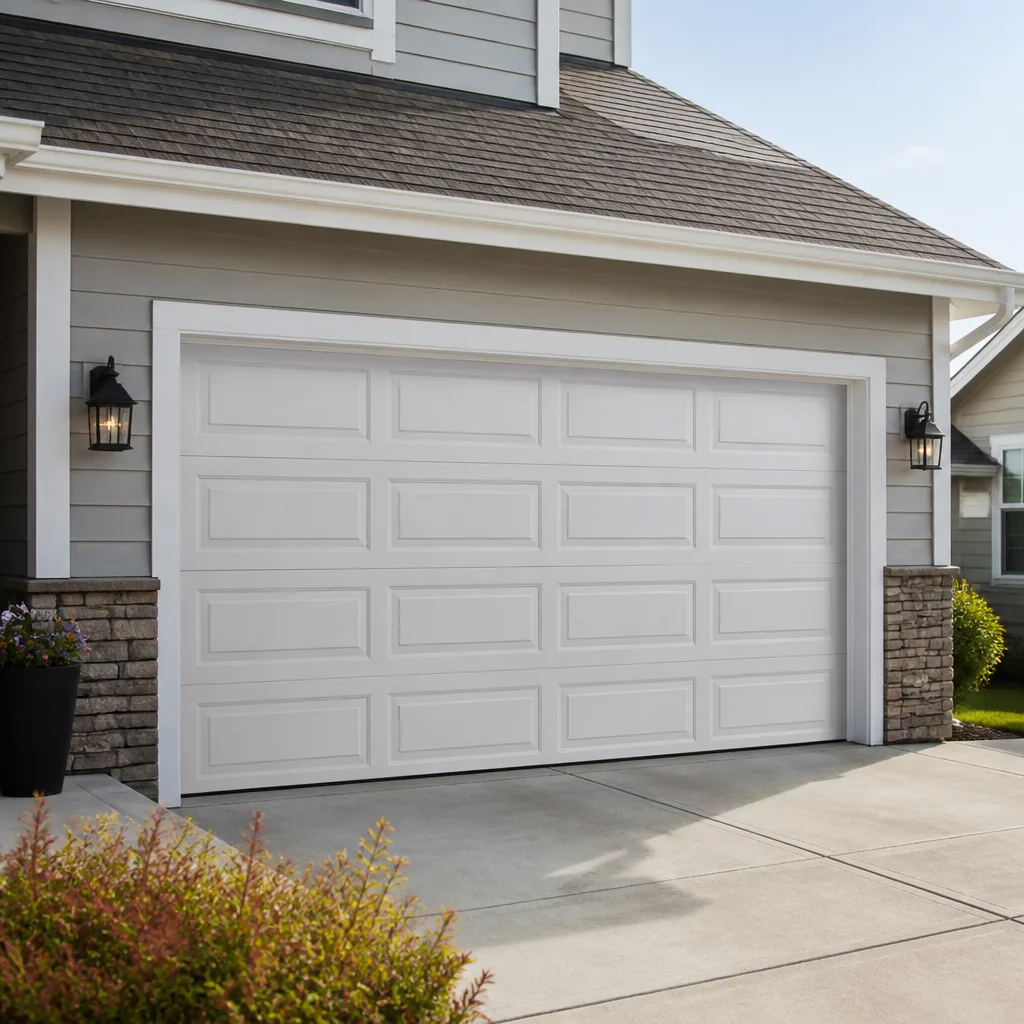 Raised-panel steel
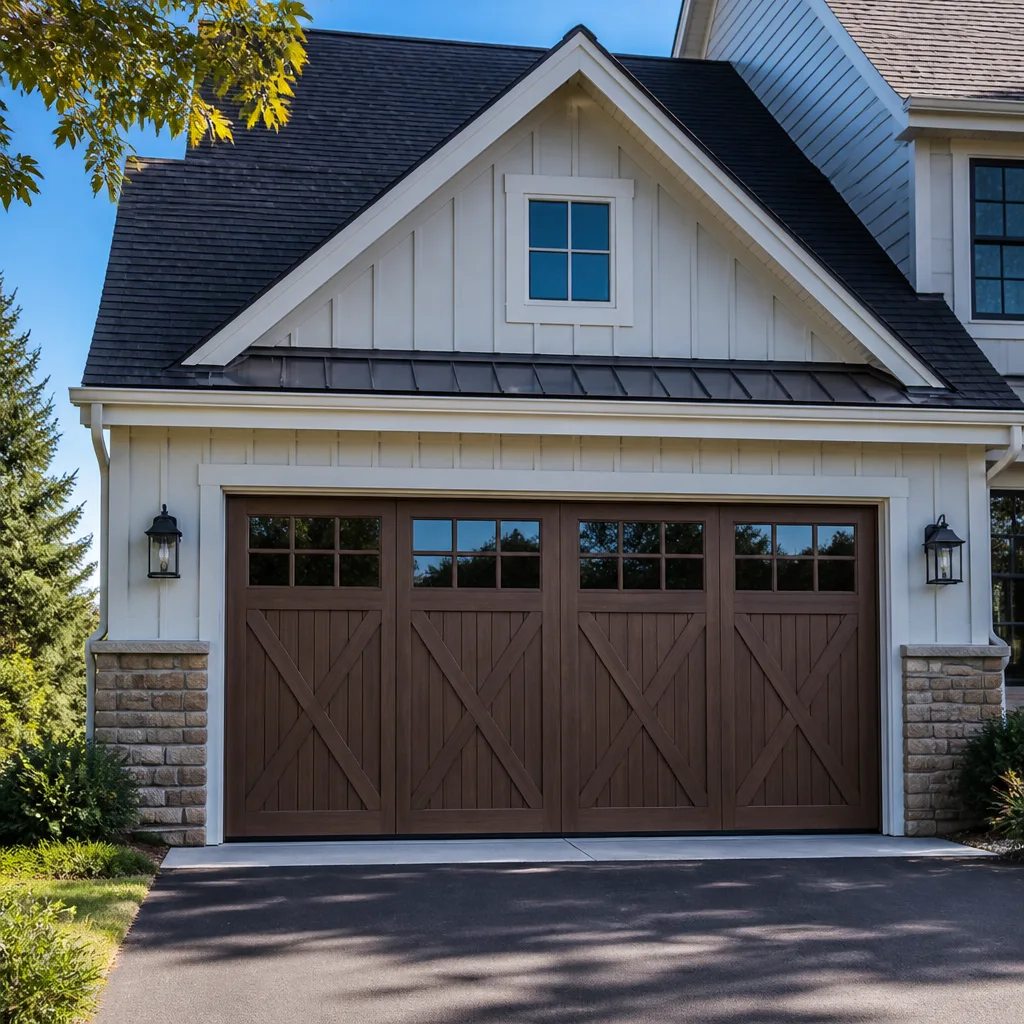 Carriage house
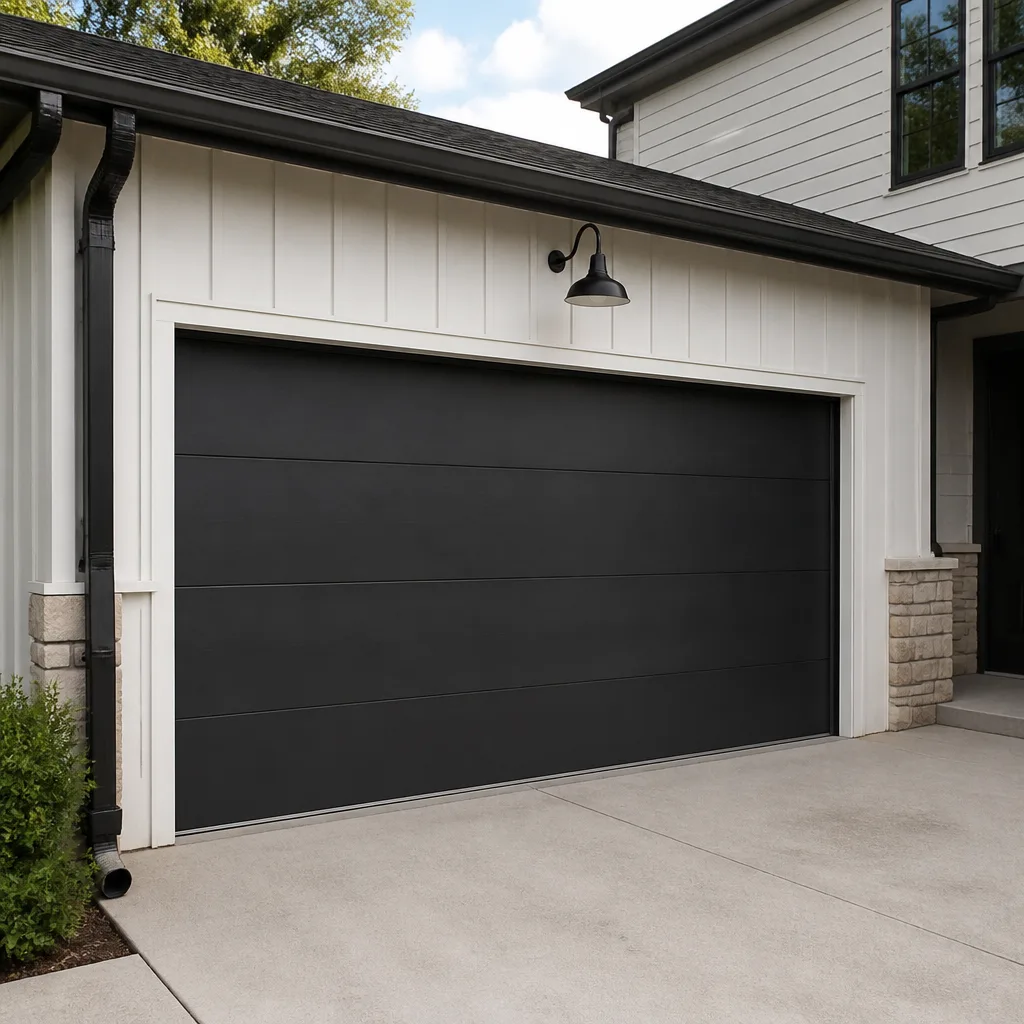 Modern flush
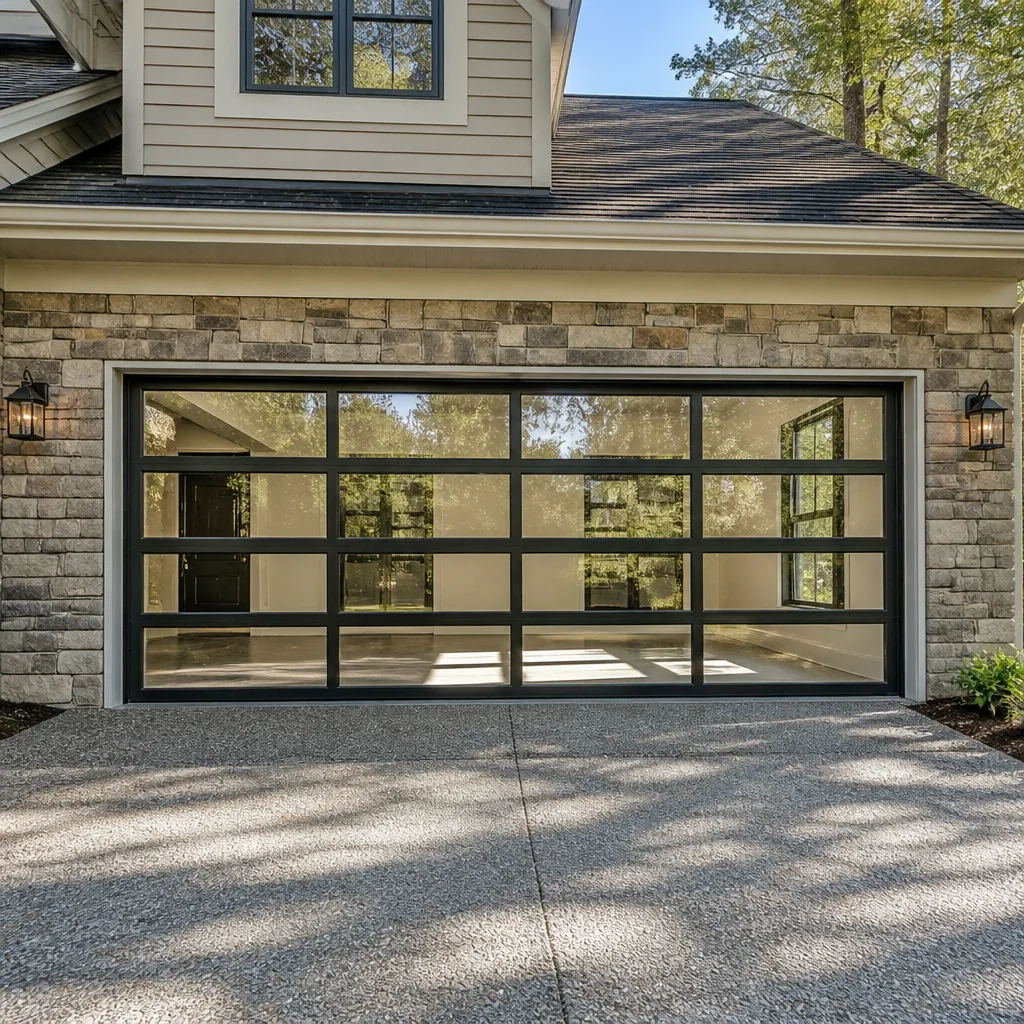 Full-view glass
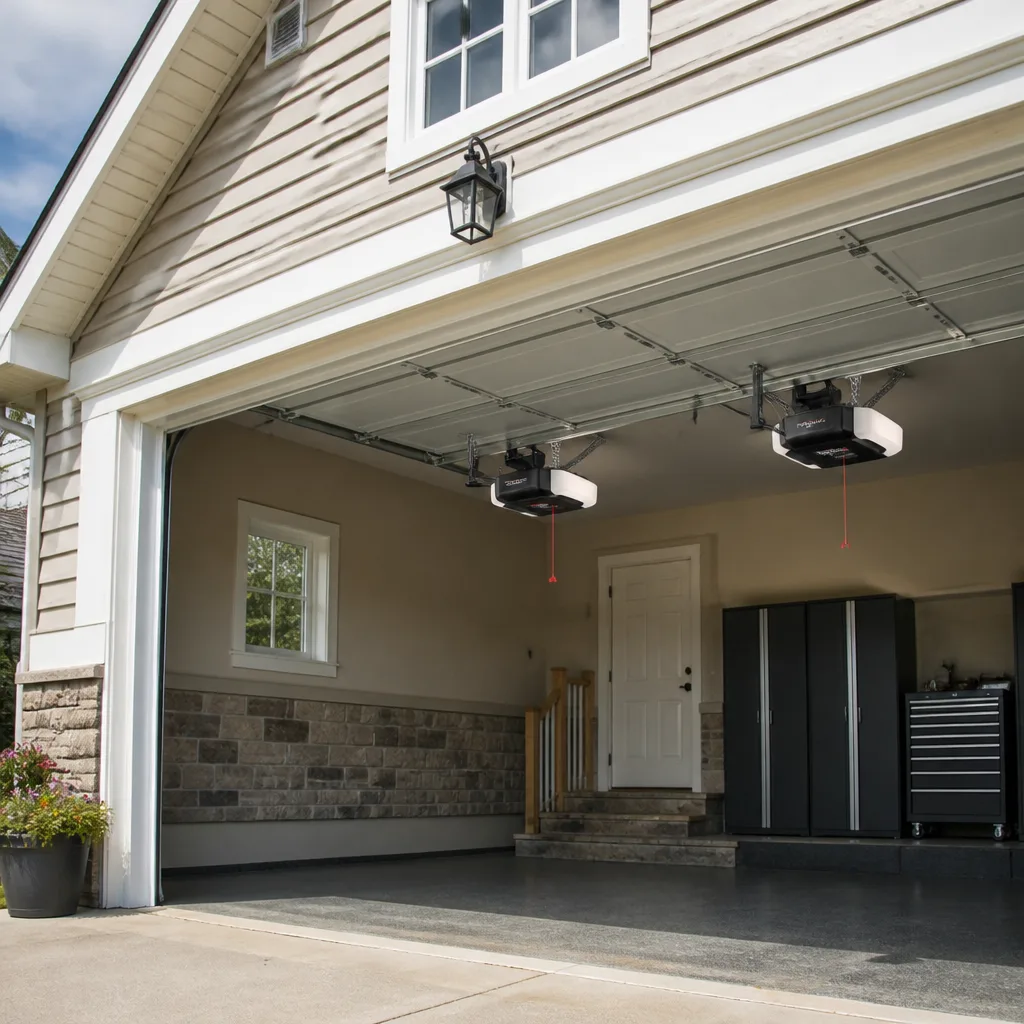 LiftMaster openers
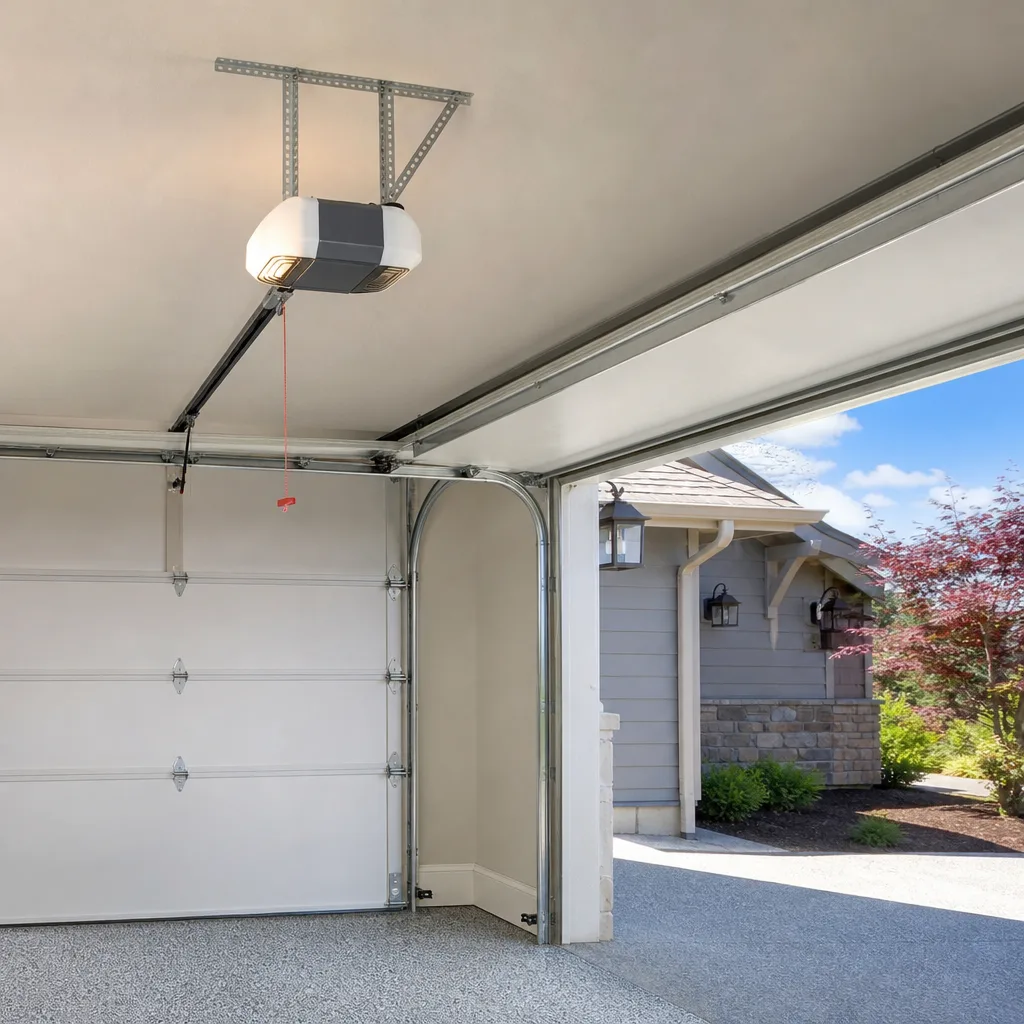 Chamberlain openers
Full 25-point door and opener safety check with every visit - springs, cables, rollers, tracks, and your LiftMaster or Chamberlain opener included
You get a price before we start. It does not change when the truck arrives.
Get your free estimateGarage Door Warning Signs: A Las Vegas Homeowner’s Reference Guide
A garage door that “just feels a little slow” in August isn’t being dramatic. In Las Vegas, thermal expansion alone can drop door speed by 30% before a single visible crack appears. When daytime temperatures push past 105°F week after week, the metal in your springs, cables, and tracks behaves differently than it does anywhere else in the country. This guide will teach you to read the specific warning signs that precede a garage door failure in Las Vegas, because the desert doesn’t fail doors the same way The Complete Guide to Garage Door in Las Vegas or standard textbooks say it should. By the time you finish, you’ll know which sounds are harmless, which ones mean “schedule a repair this week,” and which ones mean “stop using this door tonight.”
Styles & brands we work with
Quick Answer
The most common garage door warning signs in Las Vegas are a door that moves noticeably slower than it did last season, a grinding or squealing sound that changes pitch, visible gaps in the torsion spring above the door, cables that look frayed or loose, and a door that shakes or hesitates during travel. In this climate, heat accelerates spring fatigue and caliche dust masks bearing wear, so any of these signs usually means a repair is needed within days, not months-something our Seasonal Garage Door Care for Las Vegas: Year-Round Homeowner’s Guide covers in depth. If the spring is visibly cracked or the door won’t stay up, stop using it and call a professional.
Table of Contents
- A Slow Door in Summer Is a Warning, Not a Quirk
- What an Aging Spring Looks Like vs. a Dangerous One
- Why Your Door Reverses Before Hitting the Ground
- Sound Diagnosis: Grinding, Squealing, and What They Mean
- The Counterintuitive Quiet Failure: Caliche Dust and Bearing Plates
- The Severity Scale: Monitor, Schedule, or Stop Now
- Common Mistakes to Avoid
- When to Call a Professional
- Frequently Asked Questions
- The Bottom Line
A Slow Door in Summer Is a Warning, Not a Quirk
We hear it constantly from homeowners across Las Vegas: “It’s just been a little slow lately.” Here’s the problem with that sentence. A garage door opener motor is designed to move your door at a consistent speed year-round. When a door starts taking 12 or 15 seconds to open instead of the normal 8 to 10, something is working harder than it should be. In Las Vegas heat, the most common culprits are three specific things.
First, torsion springs lose tension as they age. Every spring has a cycle life, usually 10,000 cycles for standard springs and up to 25,000 or more for high-cycle springs. In Las Vegas, where garages often get used as primary entry points and summer heat accelerates metal fatigue, a spring rated for 10,000 cycles might realistically deliver 7,000 or 8,000 before it starts weakening. When spring tension drops, the opener motor compensates, which slows the door and burns out the motor faster.
Second, heat expands metal. Your tracks, rollers, and hinges all grow slightly in 110°F heat. When the track alignment is even slightly off, expansion turns a small misalignment into a binding point. The door doesn’t stop; it just gets slower.
Third, lubrication breaks down faster in the desert. Standard garage door lubricant turns gummy or evaporates within months in this climate, not years. Dry rollers add friction, and friction is speed loss.
Here’s a quick test: time your door from fully closed to fully open. If it takes more than 12 seconds, something is off. If it takes more than 15, schedule service. A slow door is always a symptom, never a personality trait.
What an Aging Spring Looks Like vs. a Dangerous One
Torsion springs, those horizontal coils mounted above your door, do about 90% of the lifting work. The opener motor just guides the door along the track. When a torsion spring fails, it releases hundreds of pounds of stored tension in a fraction of a second. That’s why knowing what a failing spring looks like before it snaps can literally prevent property damage and serious injury.
There are three visual stages of spring decline that we can describe plainly.
Stage one: aging but functional. The spring looks slightly stretched. The coils have visible gaps between them where they used to sit tight together. You might see light surface rust or a dull, grayed finish. The door still opens and closes, though it may feel heavy if you disconnect the opener and lift it manually. At this stage, you have time. Schedule a spring inspection within a month. Spring replacement in Las Vegas typically runs $150 to $290 per spring depending on size and cycle rating.
Stage two: a visible gap in the coil. This is the one most homeowners miss. Look at the spring and find a spot where the coils are separated by a gap wider than a quarter-inch. That gap means the spring has developed a stress fracture in progress. The metal is no longer one continuous working unit. At this stage, the spring can snap at any moment, often when the door is in motion. This is a “schedule within days” situation.
Stage three: an actual crack or split. You can see a clear break line running through the coil, or you can see where one section of the spring has separated from the next. This is the moment before catastrophic failure. Do not operate the door. Do not stand under the spring. Call a Garage Door Spring Repair in Las Vegas technician today. This is the one warning sign that crosses from maintenance into emergency territory.
One more note specific to Las Vegas: springs here rust from the inside out in many cases. The dry air means less corrosion than humid climates, but the temperature swings between day and night cause micro-expansion and contraction that accelerates metal fatigue. A spring that looks fine on the outside can still be near failure internally, especially if it’s more than seven years old.
Why Your Door Reverses Before Hitting the Ground
You press the button to close the door. It travels down smoothly, gets within a few inches of the floor, then reverses back up. Your first thought is probably that something is blocking the sensors. You check. Nothing’s there. The door still reverses.
In Las Vegas summers, this is frequently a sensor drift issue, not a mechanical failure. Here’s what’s happening.
Your garage door has two safety sensors mounted near the floor on either side of the opening. They project an invisible beam between them. If the beam breaks, the door refuses to close and reverses. These sensors are mounted on metal brackets that expand and contract with temperature. In a Las Vegas summer, a garage can swing 40 degrees between midday and midnight. Over weeks and months, that thermal cycling causes the brackets to drift slightly out of alignment. The beam weakens or breaks intermittently, and the door reverses.
This is a repair that often takes less than 30 minutes and typically costs $75 to $125 in Las Vegas. The fix involves realigning the sensors, tightening the brackets, and sometimes cleaning the lenses. Here’s a numbered sequence for how we typically diagnose it:
- Check whether one sensor light is blinking or dim. This indicates a weak beam or a sensor that’s lost alignment.
- Look for anything that could have shifted the bracket, including bins, tools, or even a car bumper that nudged the rail.
- Run the door and watch both sensor lights during travel. If one flickers, the vibration is pushing a loose mount just enough to break the beam.
- If the sensors check out, the next suspect is the close-limit setting. Heat can cause the opener’s internal settings to drift, making the door think it has hit an obstruction when it’s actually just reaching the floor.
One Las Vegas-specific caution: the intense heat radiating off a dark-colored driveway or garage floor in summer can create thermal shimmer that occasionally confuses older sensor models. It’s not common, but we do see it. If your door reverses only during the hottest part of the afternoon and works fine after sunset, sensor heat interference is a real possibility.
Sound Diagnosis: Grinding, Squealing, and What They Mean
Garage doors make noise. Some of it is normal. Some of it is not. The difference matters because sound is usually the earliest warning sign a door gives you. Here’s a plain-language breakdown of the most common noises we hear on service calls in Las Vegas.
Low-pitched grinding, like rocks in a garbage disposal. Two possibilities. The first is debris in the tracks. In Las Vegas, that debris is usually caliche dust, sand, or small gravel tracked in from the driveway. Cleaning the tracks and rollers solves this, and it’s something a homeowner can often handle with a rag and a vacuum. The second possibility is a roller that is cracking internally. Rollers have ball bearings inside. When a bearing starts to disintegrate, it produces a grinding sound that continues even after the tracks are clean. A cracked roller is a repair item. Rollers cost $10 to $30 each to replace in Las Vegas, and a door typically has 10 to 12 of them.
High-pitched squealing or screeching. This is almost always dry metal-on-metal contact, typically from rollers that need lubrication or hinges that have gone dry. In Las Vegas, standard lubricants dry out in a few months. The fix is quick: a silicone-based or lithium-based lubricant applied to the rollers, hinges, and the torsion spring. Avoid WD-40. It’s a degreaser, not a lubricant, and it will strip what little protection the parts have left.
Clanking or banging when the door moves. This is a mechanical issue that needs attention. Usually it means a loose hinge, a loose roller bracket, or a track that has shifted out of alignment. The door is literally metal hitting metal. Left alone, this wears out the rollers and bends the track, and that’s a much more expensive repair.
A popping sound from the spring area. This is one of the scariest sounds a garage door can make. A single pop means a coil in the torsion spring just shifted or cracked. Sometimes the door still works afterward, sometimes not. Either way, stop using the door and call a technician. A torsion spring under tension is the most dangerous component in your garage.
Here’s the fastest way to know the difference between dirty rollers and a cracking roller: clean and lubricate the rollers, then run the door. If the grinding is gone or noticeably quieter, it was dirt. If the sound is unchanged, you likely have a failing bearing, and the roller needs replacement before it seizes and takes the door off track.
The Counterintuitive Quiet Failure: Caliche Dust and Bearing Plates
This is the failure mode that most generic garage door guides never mention, and it’s the one that surprises Las Vegas homeowners most.
Caliche is the fine, chalky, mineral-rich dust that covers everything in this valley. It’s in your garage, it’s on your car, and it’s absolutely inside your garage door tracks. Here’s the counterintuitive part: caliche dust actually makes your door feel smoother. The dust fills in the microscopic imperfections in the tracks and rollers, acting like a dry lubricant. The door glides along silently and smoothly for weeks or months. Homeowners think everything is fine, because the door hasn’t made a sound.
Meanwhile, that same ultra-fine dust is working its way into the bearing plates, the metal end plates that hold the torsion spring shaft in place. Caliche dust is abrasive. Once it gets inside the bearing, it grinds away at the metal. The bearing wears from the inside out. And because the dust is still masking the friction on the track itself, the door keeps operating quietly until the bearing has worn enough for the shaft to wobble.
By the time a homeowner notices a slight wobble or a subtle scraping sound from the end plates, the bearing is usually destroyed. At that point, you’re not just paying for a bearing replacement. You’re often paying for a new shaft, and sometimes a new spring if the wobble damaged the spring’s seating.
Here’s how to spot this one early:
- Look at the bearing plates on either end of the torsion spring bar. They’re the flat metal discs mounted to the wall above the door.
- If you see dark, oily residue running down from the plate, that’s a sign the internal bearing is wearing and its lubrication is leaking out.
- If you see the shaft moving slightly side to side while the door operates, the bearing is already compromised.
- If you hear a dry, scraping sound from the end plate area, even a faint one, the bearing surface is gone.
In Las Vegas, we recommend checking these bearing plates once every spring and fall. It takes ten seconds, and it catches the one failure mode that never announces itself until the repair bill has doubled.
The Severity Scale: Monitor, Schedule, or Stop Now
Not every warning sign demands immediate action. But in Las Vegas, where a garage door can be the main entry to a home and the heat can accelerate deterioration, the line between “monitor” and “emergency” is thinner than most guides suggest. Here’s our severity scale, based on what we see across Las Vegas service calls every week.
Monitor: watch it, but you have time.
- A door that’s slightly slower but still completes its cycle in under 12 seconds.
- Light squealing that stops after lubrication.
- Minor track debris or dust buildup.
- Surface rust on the spring with no visible gaps or cracks.
- Sensor reversal that happens only occasionally and always resolves.
Most of these items can wait a few weeks, but not indefinitely. If you’re not sure whether a noise is new or old, record a short video on your phone and compare it to the same door a week later.
Schedule soon: book a repair within the next week.
- A visible gap in the torsion spring coils.
- Consistent clanking or banging during door travel.
- The door shakes or shudders while opening.
- Grinding that doesn’t improve after cleaning and lubricating.
- Reversing that happens every time, even after you check the sensors.
These are all signs of active wear. None of them are emergencies yet, but every one of them gets more expensive the longer you wait. A clanking door today is a bent track next month.
Stop now: do not operate the door again until it’s been repaired.
- The torsion spring is visibly cracked or snapped.
- You heard a loud pop from the spring area, even if the door still works.
- A cable is frayed, kinked, or hanging loose.
- The door won’t stay up when opened halfway and released.
- The door begins to travel then slams down.
These are the scenarios where using the door risks injury and property damage. A snapped cable or failing spring can send a 150-pound door crashing down without warning. If you’re in this category, Garage Door Repair in Las Vegas should happen today, not this week.
Common Mistakes to Avoid
- Lubricating a failing spring to quiet it down. People do this constantly. A spring that’s cracking under tension doesn’t need lube; it needs replacement. Adding lubricant temporarily masks the sound while the crack continues to spread. If your spring is making popping or grinding noises, lubrication is not the fix.
- Ignoring a slow door because “it still works.” In Las Vegas, the opener motor is working overtime in summer heat. Every week you run a door with weakened springs, you’re shortening the life of the opener motor, which is a $300 to $500 replacement. Fixing the spring now protects the motor.
- Adjusting the sensor bracket with force. The brackets are meant to be adjustable, but bending them by hand to “fix” the alignment is how sensors get permanently damaged. That turns a $100 repair into a $200 sensor replacement.
- Waiting to fix a noisy roller because it’s “not that bad.” A roller that’s grinding is eating away at the track. Replace the $15 roller now or replace the $150 track section later.
- Using the garage door as the house’s front door without increasing maintenance frequency. Many Las Vegas homes use the garage entrance as the primary door. That means the door cycles 3 to 5 times more per day than a door that’s only used for parking. More cycles means faster spring wear, which means twice-yearly inspections matter more here than in other markets.
- Assuming a quiet door means a healthy door. Caliche dust masks bearing wear. The quietest door on the block can have a failing end-plate bearing. Visual inspection catches what sound won’t.
When to Call a Professional
You can clean tracks, lubricate rollers, and check sensor alignment yourself. But there are specific scenarios where DIY crosses from maintenance into danger. If the torsion spring is cracked, snapped, or shows visible coil separation, do not touch it. The spring holds hundreds of pounds of torque, and a wrong move releases that force in an instant. Same rule applies to cables: a frayed cable means a door that can drop. Door off its track? That’s a two-person, tool-heavy job that can end badly if the door falls during the repair. Marlow Garage Door Repair Las Vegas offers free estimates throughout Las Vegas, and we’ll give you a written price before any work starts, as explained in our How to Hire a Garage Door Contractor in Las Vegas: A Step-by-Step Guide. Call (725) 373-9798 and a real person answers, 24/7.
Frequently Asked Questions
Spring replacement in Las Vegas typically runs $150 to $290 per spring depending on the size, wire gauge, and cycle rating of the spring. High-cycle springs cost more upfront but last significantly longer in this climate. You’ll see the exact written price before any work begins. Call (725) 373-9798 for a free estimate.
Yes, in most cases we can dispatch a technician the same day for spring, cable, and roller repairs in Las Vegas. Emergency calls, especially snapped springs or doors that won’t close, get priority. A live person answers 24/7 at (725) 373-9798.
In summer, thermal expansion causes sensor brackets to drift out of alignment, weakening the safety beam and making the door reverse as if something were in the way. It can also happen when the close-limit setting drifts in the heat. Both are fixable, usually the same day.
Look for visible gaps between the spring coils, surface cracks, rust, or a spring that looks stretched compared to when it was new. A loud pop from the spring area is the strongest indicator that failure is imminent. Any of these signs means the door should not be used until a professional inspects it.
A slow door isn’t immediately dangerous, but it means the springs are losing tension or the tracks are binding. Both conditions worsen over time. A door that has slowed noticeably should be inspected within the week to avoid a spring snap or an opener motor burnout.
Yes. Our technicians are trained on eight major brands including Genie, Clopay, Amarr, and Wayne Dalton, so whoever built your door and opener, we already know how to fix it. Every repair is covered by the 365-Day Done Right Promise, and you get a written price before work starts. Call (725) 373-9798 to book.
No. The price we quote is the price you pay. We deliver a written price before any work begins, and that number is locked. If additional work is needed, we re-quote and get your approval first. There are no surprise line items on the invoice.
Our trucks are stocked with the most common spring sizes, cables, and rollers for Las Vegas homes, including parts for Genie, Clopay, Amarr, and Wayne Dalton systems. That means most repairs happen in one visit. Call Garage Door Cable Repair in Las Vegas for same-day cable and spring work.
The Bottom Line
Garage doors in Las Vegas fail differently than garage doors anywhere else. Heat accelerates spring fatigue, caliche dust hides bearing destruction, and the daily use patterns in this city mean most doors log more cycles than manufacturers expect. The warning signs are there if you know how to read them: a slow door, a grinding roller, a gap in the spring coil, a sensor that keeps drifting in the heat. None of these fix themselves, and all of them are cheaper to address today than they will be next month. If your door is showing any of the signs in this guide, call Marlow Garage Door Repair Las Vegas at (725) 373-9798. We’ll give you a straight answer and a written price, every time.
Written by Jaylen Ross, Owner at Marlow Garage Door Repair Las Vegas, serving Las Vegas since 2002.
See the difference
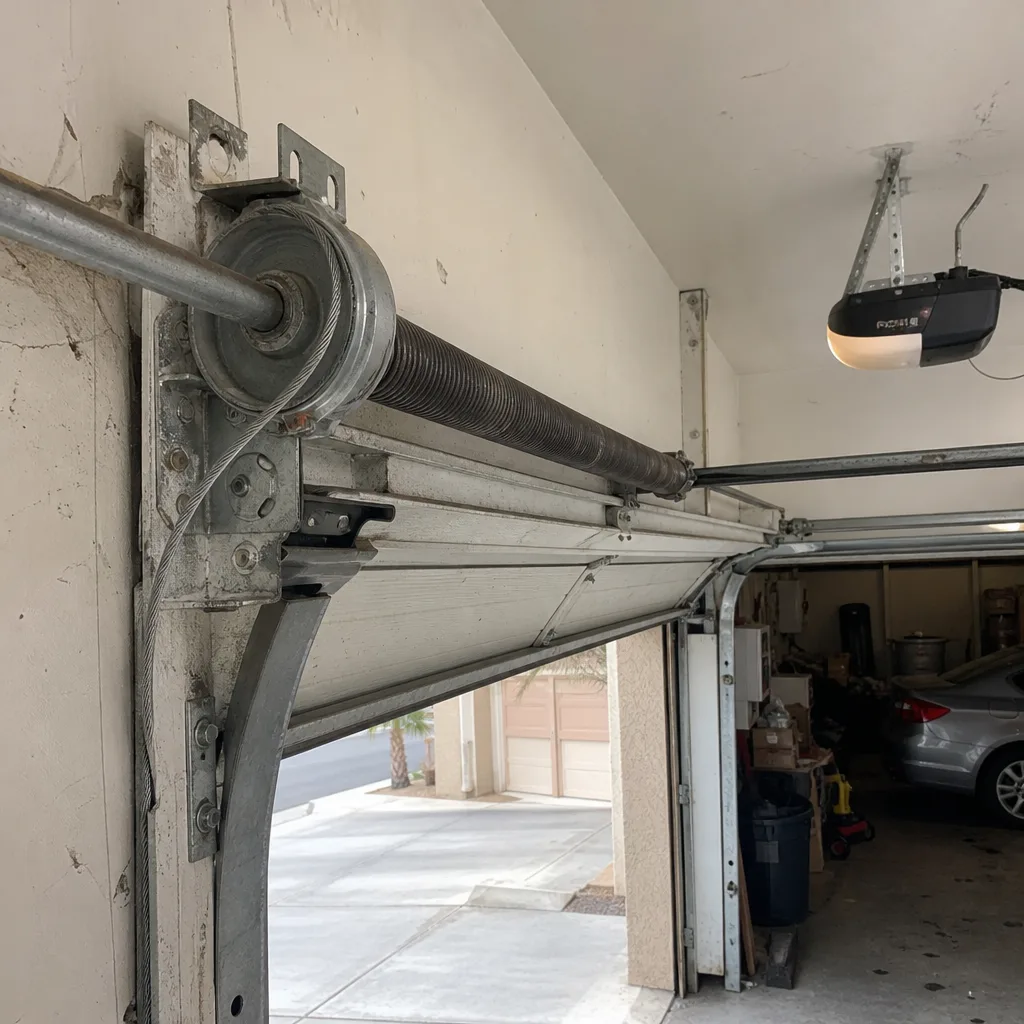 Before
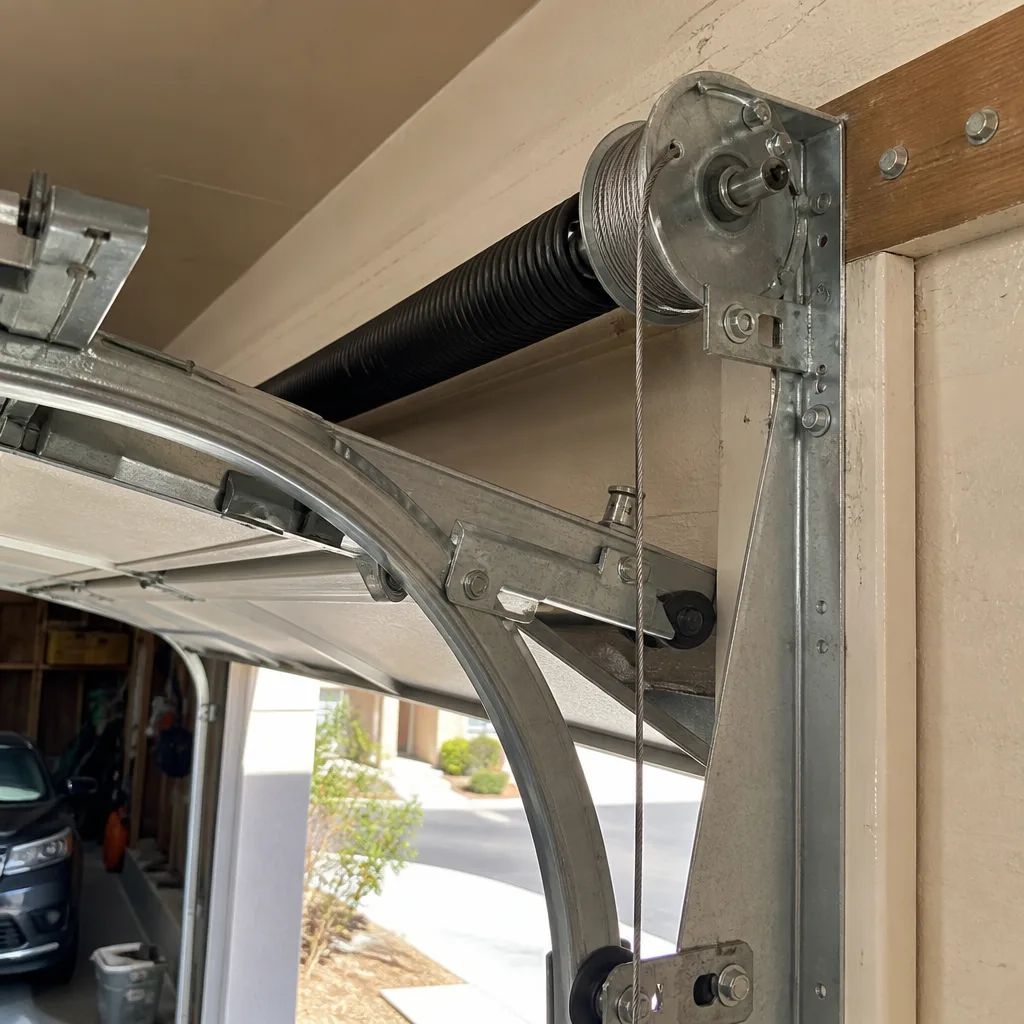 After
After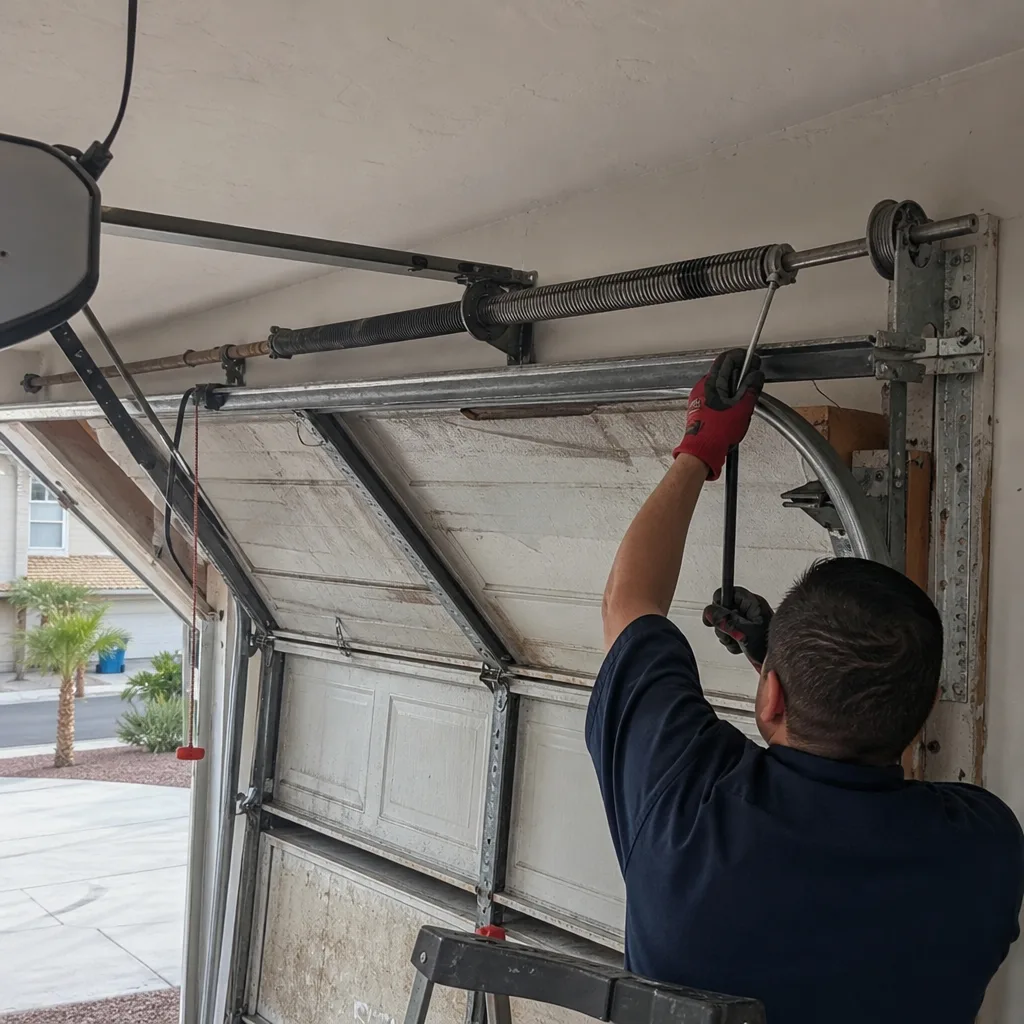 Before
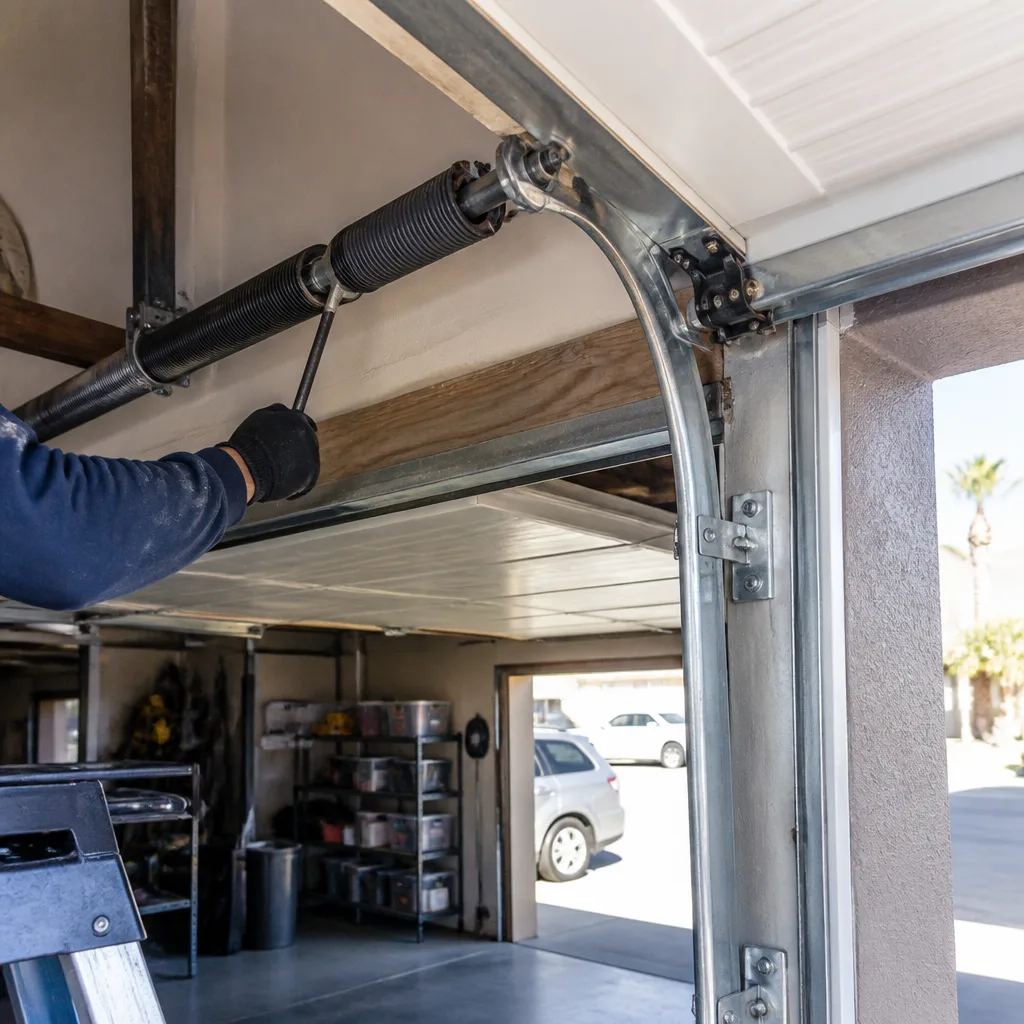 After
After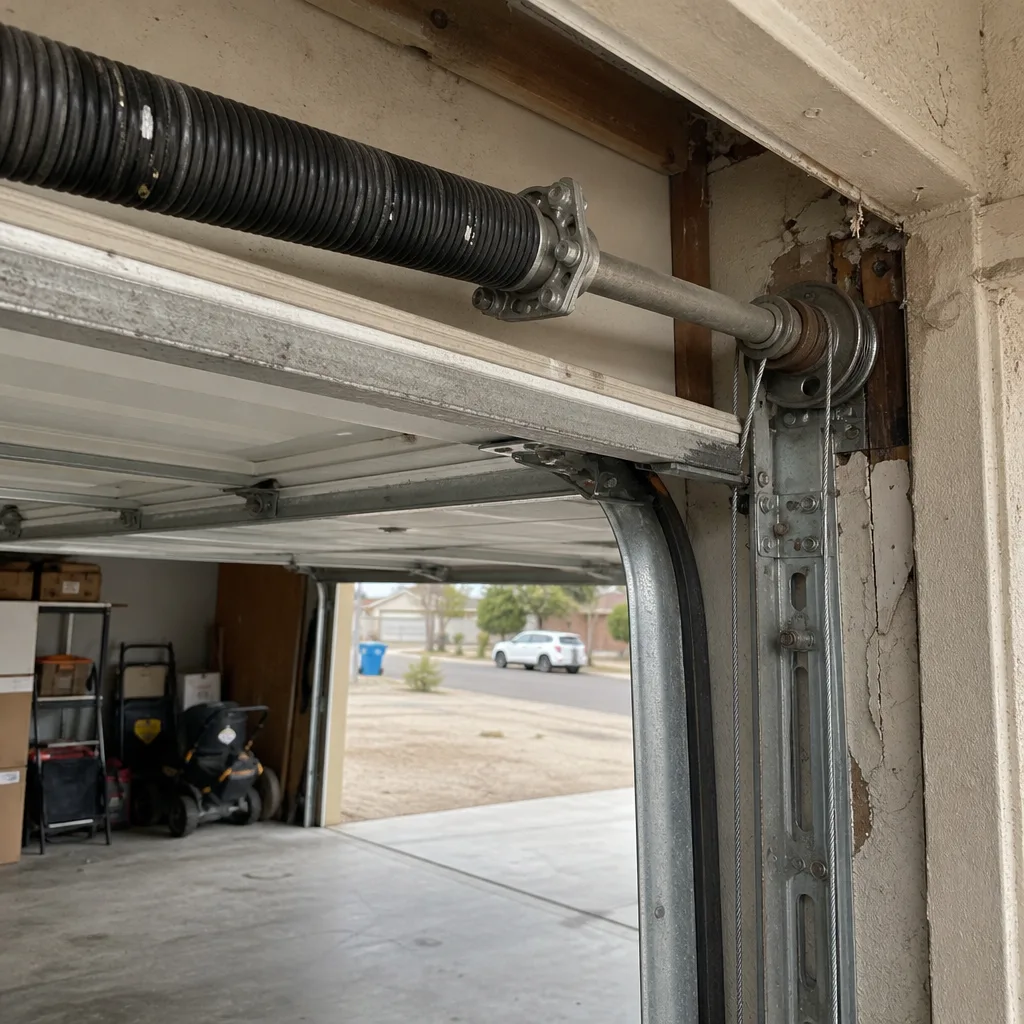 Before
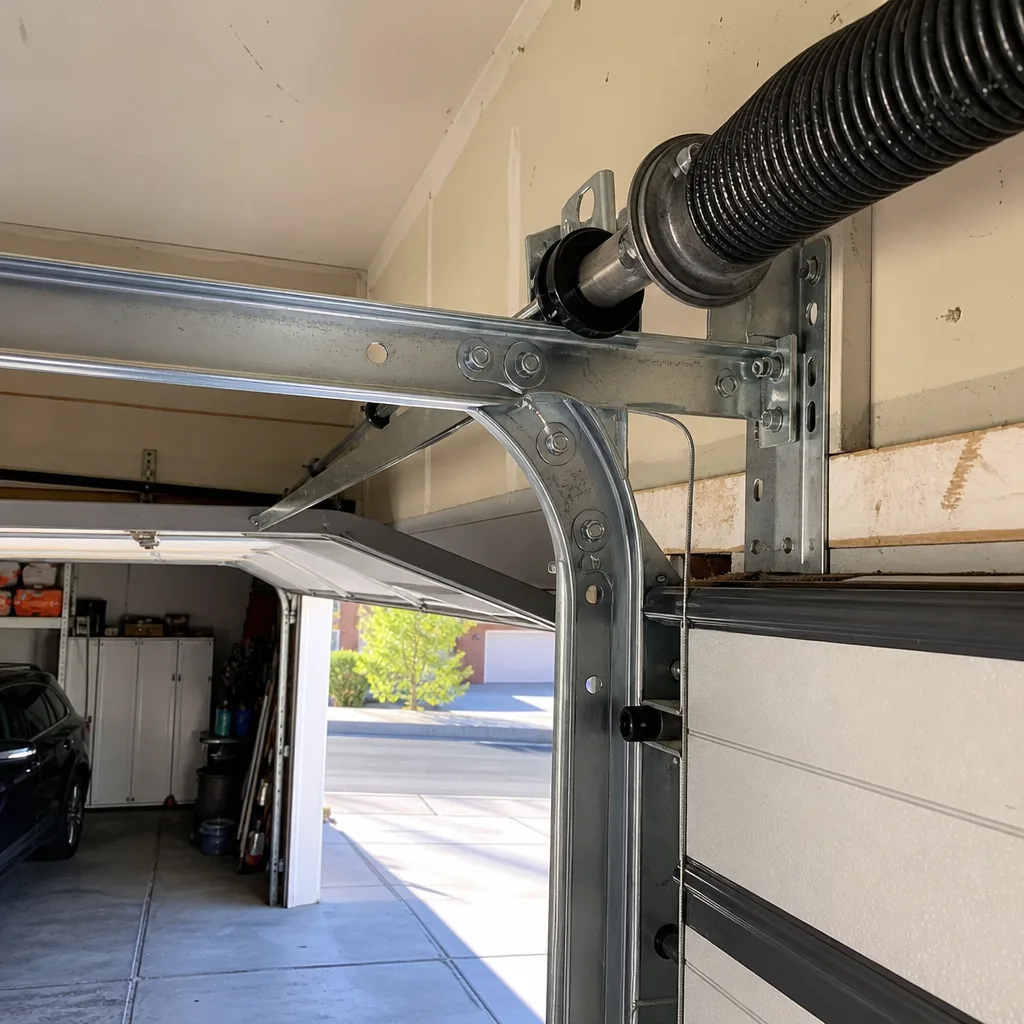 After
After