
Last updated October 16, 2026
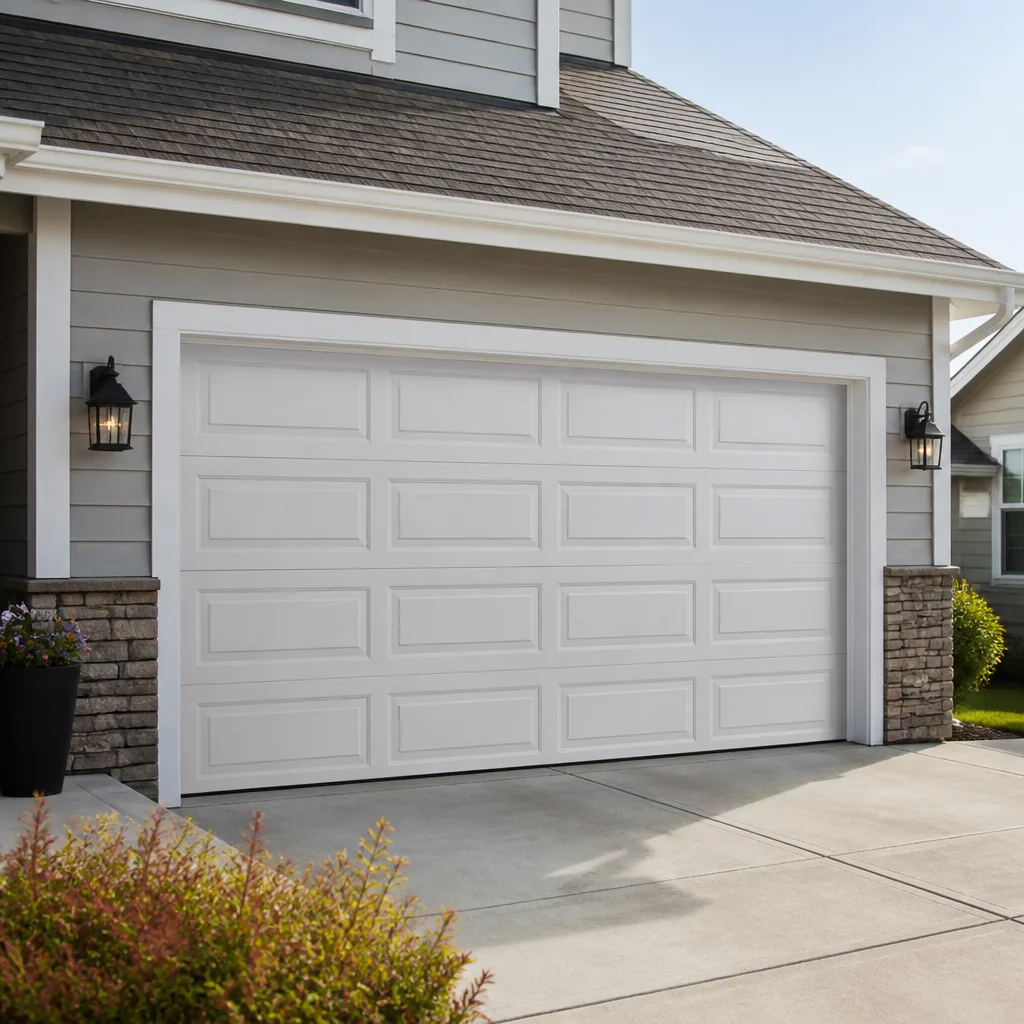 Raised-panel steel
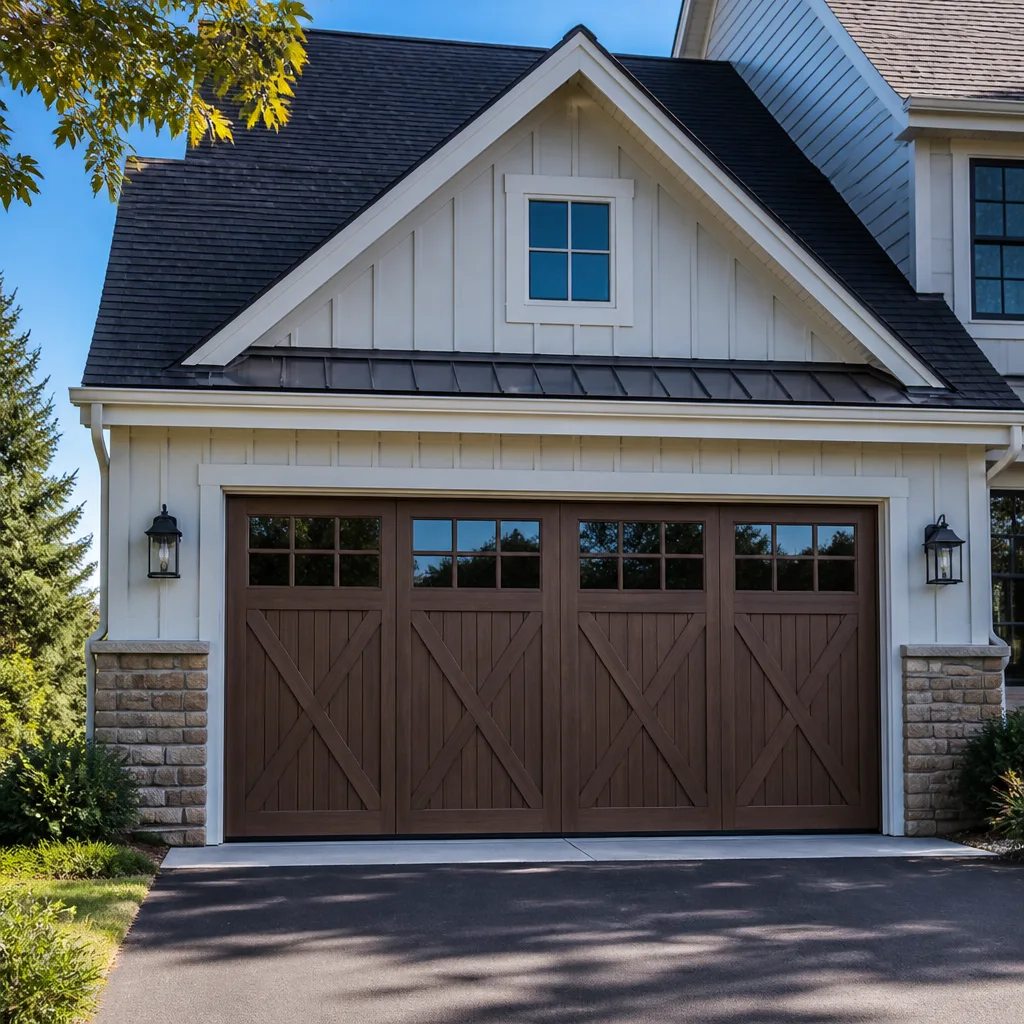 Carriage house
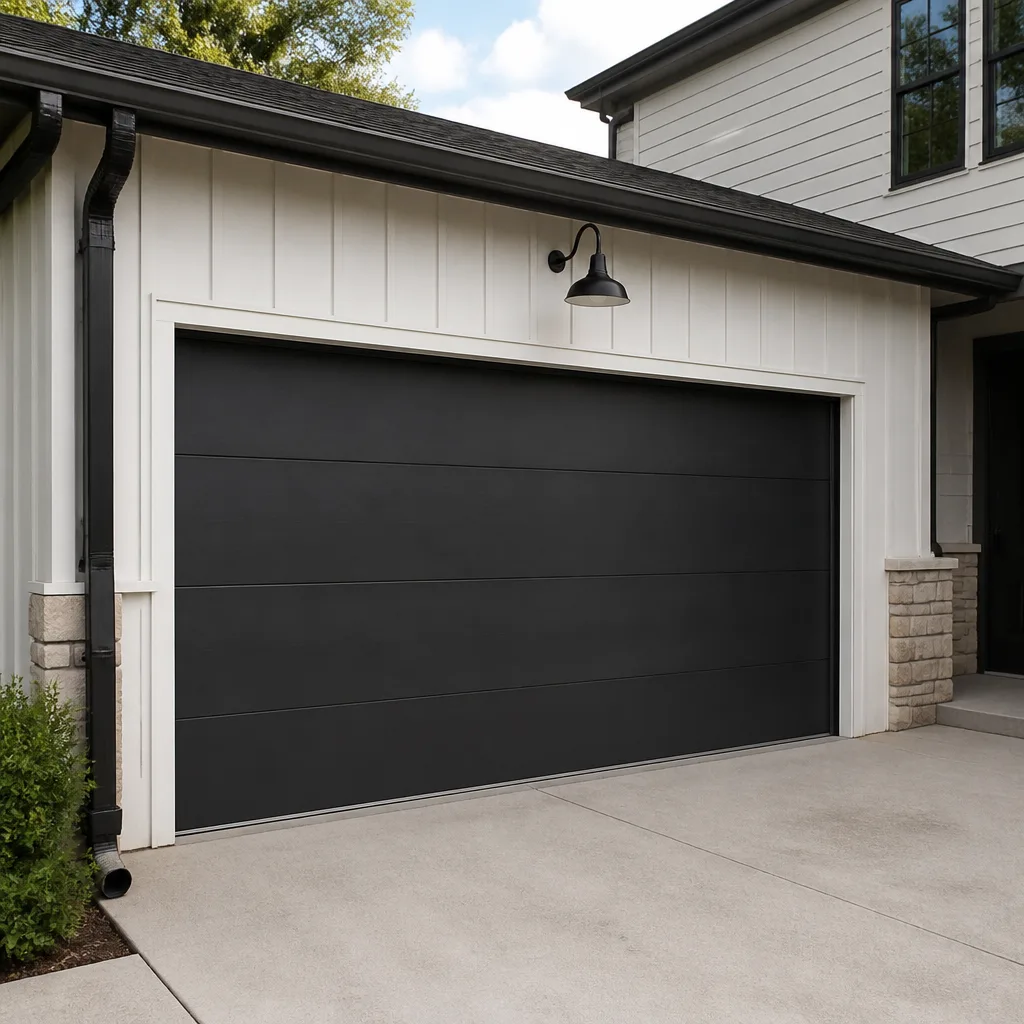 Modern flush
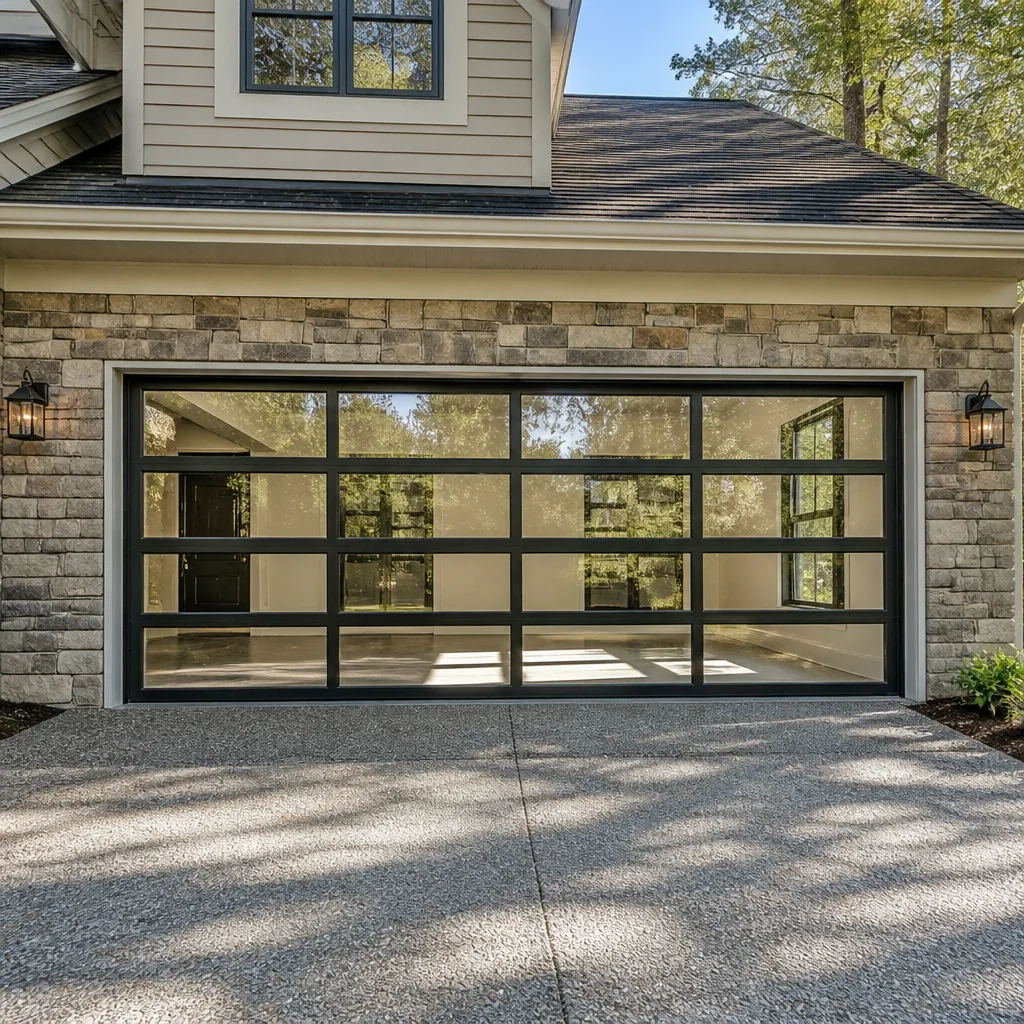 Full-view glass
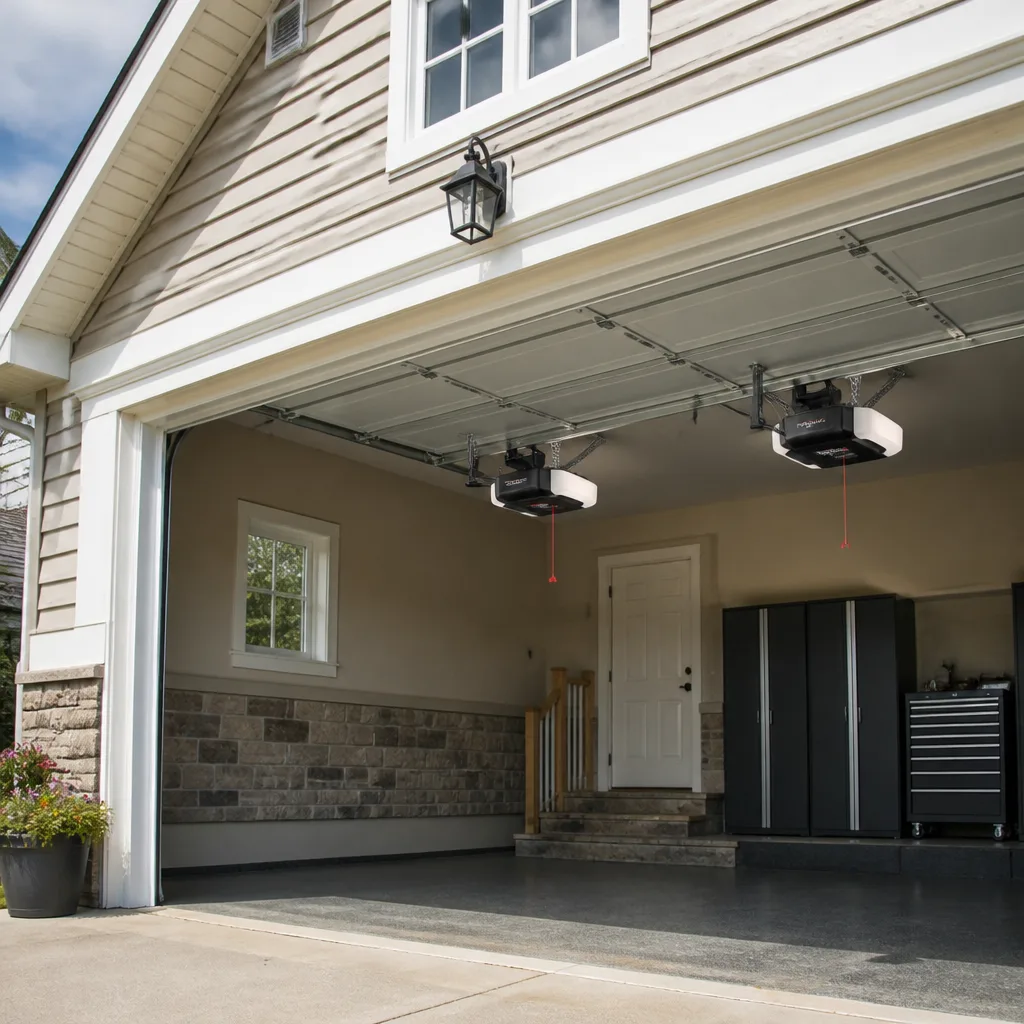 LiftMaster openers
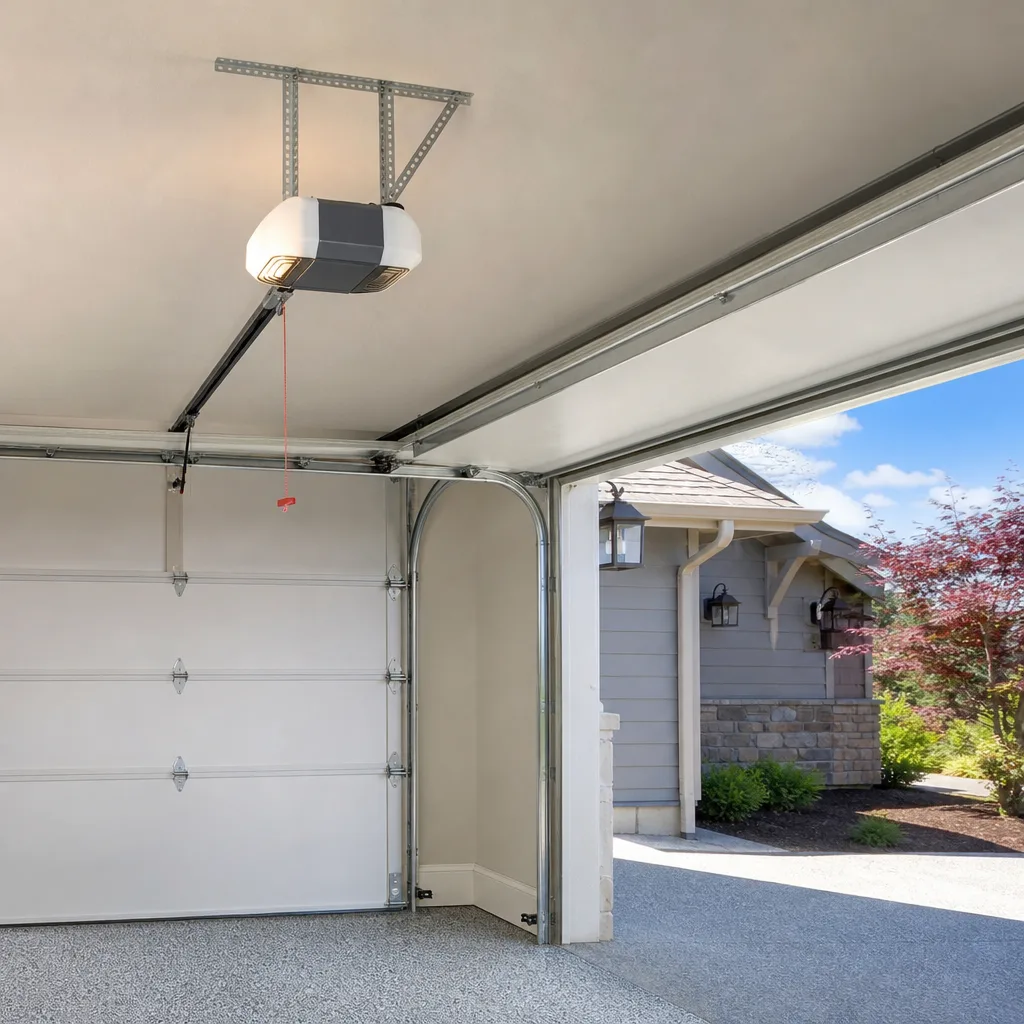 Chamberlain openers
Full 25-point door and opener safety check with every visit - springs, cables, rollers, tracks, and your LiftMaster or Chamberlain opener included
You get a price before we start. It does not change when the truck arrives.
Get your free estimateThe Complete Guide to Garage Door in Las Vegas
The average Las Vegas garage door operates in temperatures that swing 50°F in a single day, a stress cycle that snaps springs, warps panels, and degrades rollers roughly twice as fast as the national average. Most homeowners find this out the hard way, usually at 6:45 a.m. on a workday with a car trapped inside. This guide explains why garage doors in Las Vegas fail the way they do, what repairs actually cost here, which materials survive the Mojave, and how to get a door fixed without the runaround. For more guides & resources, explore our blog. By the end, you’ll know more about your garage door than most people in this city learn in a lifetime of homeownership.
Styles & brands we work with
Quick Answer
Garage door repair in Las Vegas typically costs between $125 and $450 for common fixes like spring replacement, cable repair, and roller swaps, with spring replacement averaging $210 to $380. The single best move is to get a written price before any work starts, since Las Vegas has an unusually high number of transient service companies that quote low and bill high. A reputable Las Vegas garage door company will confirm the price on paper, explain what’s wrong in plain language, and back the repair with at least a one-year written guarantee.
Table of Contents
- How the Las Vegas Climate Destroys Garage Doors
- Garage Door Materials: What Survives the Mojave
- The Real Cost of Garage Door Repair in Las Vegas
- HOA Rules and Garage Doors in Las Vegas
- Written Price vs. “Free Estimate”: What the Difference Means
- Garage Door Components, Explained in Plain Language
- When to Replace vs. Repair a Las Vegas Garage Door
- Common Mistakes to Avoid
- When to Call a Professional
- Frequently Asked Questions
- The Bottom Line
How the Las Vegas Climate Destroys Garage Doors
Las Vegas isn’t just hot. It’s a thermal cycling machine. Any given summer day can push your garage interior past 115°F by mid-afternoon, then drop to the low 80s or 70s at night. Over a year, that’s hundreds of expand-contract cycles on every metal component in your door system. The National Weather Service records average diurnal temperature swings of 30 to 40 degrees Fahrenheit in Las Vegas throughout the year, which is a polite way of saying your torsion spring is being flex-tested daily.
Here’s what actually fails and why:
- Torsion springs: These are the horizontal coils above your door that do most of the lifting. They’re rated for a certain number of cycles, typically 10,000 for standard springs. But extreme heat accelerates metal fatigue. In Las Vegas, springs that would last 8 to 10 years in Ohio often fail in 5 to 6. We regularly see springs snap in Summerlin and Henderson homes that are only half a decade old.
- Extension springs: Used on older or lighter doors, these stretch along the horizontal tracks. Heat degrades the lubricant inside the coils faster here, leading to friction, uneven stretching, and sudden failure.
- Rollers: Nylon rollers with sealed bearings last longer than steel rollers in Las Vegas. Steel rollers corrode from dust abrasion and extreme dry heat, causing them to grind against the track. You’ll hear them first: a persistent metal-on-metal scraping sound on opening and closing.
- Cables: High-tension steel cables hold the door’s weight and work in tandem with the springs. In Las Vegas, micro-fractures from thermal expansion lead to fraying, which then snaps under load. A cable snap is loud, dangerous, and always requires immediate attention from a trained professional.
- Weather seals: The rubber or vinyl strips along the bottom and sides of your door bake in the Mojave sun. Within three to four years, they turn brittle and crack, letting dust, heat, and pests into your garage. Las Vegas dust storms, especially in the May-to-September monsoon season, blast fine particulate that works its way into every gap.
The takeaway isn’t that garage doors in Las Vegas are fragile. It’s that maintenance here is different. A door that gets inspected once a year and has its springs and rollers replaced before failure is far cheaper to own than a door ignored until something snaps. And something always snaps, usually at the worst possible time.
Garage Door Materials: What Survives the Mojave
The Mojave Desert doesn’t care about your garage door preferences. It cares about material science. Choose wrong and you’ll be replacing a warped, faded, delaminating door in a fraction of the time you’d expect in a milder climate. Here’s what actually holds up in Las Vegas.
Steel: The Workhorse, With a Catch
Steel garage doors dominate Las Vegas for a reason. They’re strong, affordable, and handle wind well. But not all steel is the same. Steel gauge matters: 24-gauge steel is thicker and more dent-resistant than 27-gauge, which is what most budget doors use. In Las Vegas, a 24-gauge door with a factory-applied polyester or polyurethane finish will survive UV exposure significantly better than a 27-gauge door with a thin paint coat. If your garage faces south or west, direct afternoon sun will fade a cheap steel door within 2 to 3 years. Spend more upfront on a higher gauge with a thermal break, and you’ll get 12 to 15 years out of it.
Fiberglass: Light but Fragile Under UV
Fiberglass doors weigh less, which reduces spring and cable strain. That’s the good news. The bad news is that fiberglass resin yellows and becomes brittle under intense UV exposure. Las Vegas gets more than 300 sunny days a year. We’ve seen fiberglass panels in the Lakes and Green Valley Ranch areas crack within four years, especially where the door gets direct afternoon sun. Fiberglass can work on north-facing garages with shade, but it’s a niche choice here.
Aluminum: Corrosion Resistant, Easily Dented
Aluminum doors resist rust well, which matters less in Las Vegas than in coastal cities since we’re not fighting salt air. But aluminum dents easily. A loose basketball or a misjudged parking job leaves a permanent mark. Aluminum with a wood-grain finish can look excellent on modern homes in areas like Summerlin or Mountain’s Edge, but expect to replace the door sooner if it takes hits from kids’ gear or car doors.
Wood and Wood Composite: Beautiful but High-Maintenance
Wood doors are gorgeous and almost nobody buys them in Las Vegas as a primary door if they want it to last. The extreme dry heat causes wood to dry out and crack, and repainting every 18 to 24 months is a non-negotiable if you want to avoid warping. Wood composite reduces some of this but still requires regular sealing. For a garage that gets daily use, steel with a wood-grain finish gives you 90% of the aesthetic at 20% of the maintenance.
Insulated vs. Non-Insulated
In Las Vegas, an insulated garage door isn’t optional if your garage is attached to your home and you spend any time in it. Polystyrene insulation offers about R-6 to R-9, while polyurethane injection insulation delivers R-12 to R-18. An uninsulated door can reach 140°F on the interior surface in July. That heat bleeds into your garage and then into your home. Even if the garage is detached, insulation reduces the thermal load on your car’s battery, tires, and any stored items you care about.
The Real Cost of Garage Door Repair in Las Vegas
National averages for garage door repair are useless in Las Vegas. Labor rates here run higher than the Midwest because quality technicians are in demand and good ones don’t work for cheap. Parts also cost differently: the same torsion spring that costs $60 to $90 online can carry a higher installed price here due to market demand and the reality that a good tech brings the right spring on the truck. Here’s the actual price spectrum Las Vegas homeowners should expect in 2025 and 2026:
| Repair Type | Typical Las Vegas Price Range | What Affects the Price |
|---|---|---|
| Spring replacement (single torsion) | $180 – $320 | Spring size, cycle rating, access difficulty |
| Spring replacement (dual torsion) | $260 – $450 | Paired springs recommended when one fails |
| Cable replacement (per side) | $125 – $210 | Cable type, drum condition, door weight |
| Roller replacement (set of 10-12) | $110 – $190 | Nylon vs. steel, bearing quality |
| Track realignment | $90 – $160 | Track damage extent, door balance re-check |
| Weather seal replacement | $70 – $130 | Seal material, door width |
| Opener motor replacement | $280 – $480 | Horsepower, smart features, brand |
| Panel replacement (per panel) | $220 – $450 | Material, size, color matching |
What does “same-day service” actually mean in Las Vegas? It means you called before noon and a tech shows up before the end of the day. It does not mean the repair is more expensive; that’s a myth pushed by some companies. What drives the price is the part itself, the labor time, and whether you want standard springs or high-cycle springs rated for 20,000 to 30,000 cycles instead of 10,000. High-cycle springs add anywhere from $40 to $90 to the total, and in Las Vegas where heat shortens spring life, they’re often the smarter investment. A spring rated for 25,000 cycles might last 9 to 11 years here versus 5 to 6 for a standard spring.
HOA Rules and Garage Doors in Las Vegas
Las Vegas is a city of master-planned communities, and master-planned communities have HOAs with opinions about garage doors. If you live in Summerlin, Henderson’s Green Valley, North Las Vegas master-planned areas, or Mountain’s Edge, your garage door style is likely governed by architectural guidelines that predate your repair emergency. Here’s what you need to know before you choose a door or a panel color.
Most Las Vegas HOAs require:
- Matching color and style: Your door must match the home’s approved palette, which usually means specific steel door colors like white, sand, almond, or a specific wood-grain tone. Painting your door can be restricted entirely.
- No visible damage: Many HOAs consider a dented panel or mismatched replacement panel a violation. Even in non-gated neighborhoods, a badly damaged door can trigger an enforcement letter. This matters because a panel replacement that doesn’t match is functionally useless in an HOA community.
- Architectural review for full replacements: In many communities, installing a different door style requires approval first. Swapping a standard raised-panel door for a modern glass-and-aluminum door may need a design review committee sign-off, which can take 2 to 4 weeks.
- Insulation requirements in some communities: A small number of newer communities in Summerlin West and Skye Canyon have begun including minimum insulation values in their design guidelines, especially for attached garages.
The practical implication: before any panel replacement or full door replacement, check your HOA’s CC&Rs. Ask your repair company if they’ve worked in your community before. A Las Vegas garage door company that’s done 50 jobs in Summerlin already knows which colors and styles are approved and which will get you fined. That local knowledge saves you time and prevents a second expense you didn’t budget for.
Written Price vs. “Free Estimate”: What the Difference Means
Las Vegas has a garage door repair market problem: too many companies operate like they’re passing through. They quote a price over the phone, a tech arrives, and suddenly the price is different. The spring that was $150 is now $310 because “your door also needs this and that.” This is the bait-and-switch pattern, and it’s rampant in cities with high homeowner turnover and high demand spikes during summer months.
A “free estimate” is often worthless because it carries no obligation on the company’s side. They can tell you anything and then change it. A written price, delivered before any wrench turns, is a contract. You see the line items: spring cost, labor time, any additional parts. You agree to that number or you don’t. If the company then finds something else broken once the door is opened up, a reputable shop will stop, show you the problem, and get your sign-off on a revised written price before continuing. You never agree to a new number after the work is done.
This distinction matters more in Las Vegas than most places because we have an unusually high number of garage door businesses that register, operate for 1 to 3 years, and disappear. They don’t need repeat business. They need volume. For a homeowner, a company that puts the price in writing and backs the repair with a 365-Day Done Right Promise is signaling permanence. It’s saying: if this fails, we’ll come back, because we’ll still be here.
Every job at Marlow Garage Door Repair Las Vegas includes a written price before any work begins. It’s not an upsell tactic, it’s the floor. If the number on the final invoice doesn’t match the number you agreed to, that’s on us. No exceptions, no fine print.
Garage Door Components, Explained in Plain Language
Most homeowners never learn what their garage door is made of until it breaks. That’s normal, but knowing the basic parts means you’ll understand what a technician is telling you. Here are the core components and what they do.
Torsion Springs
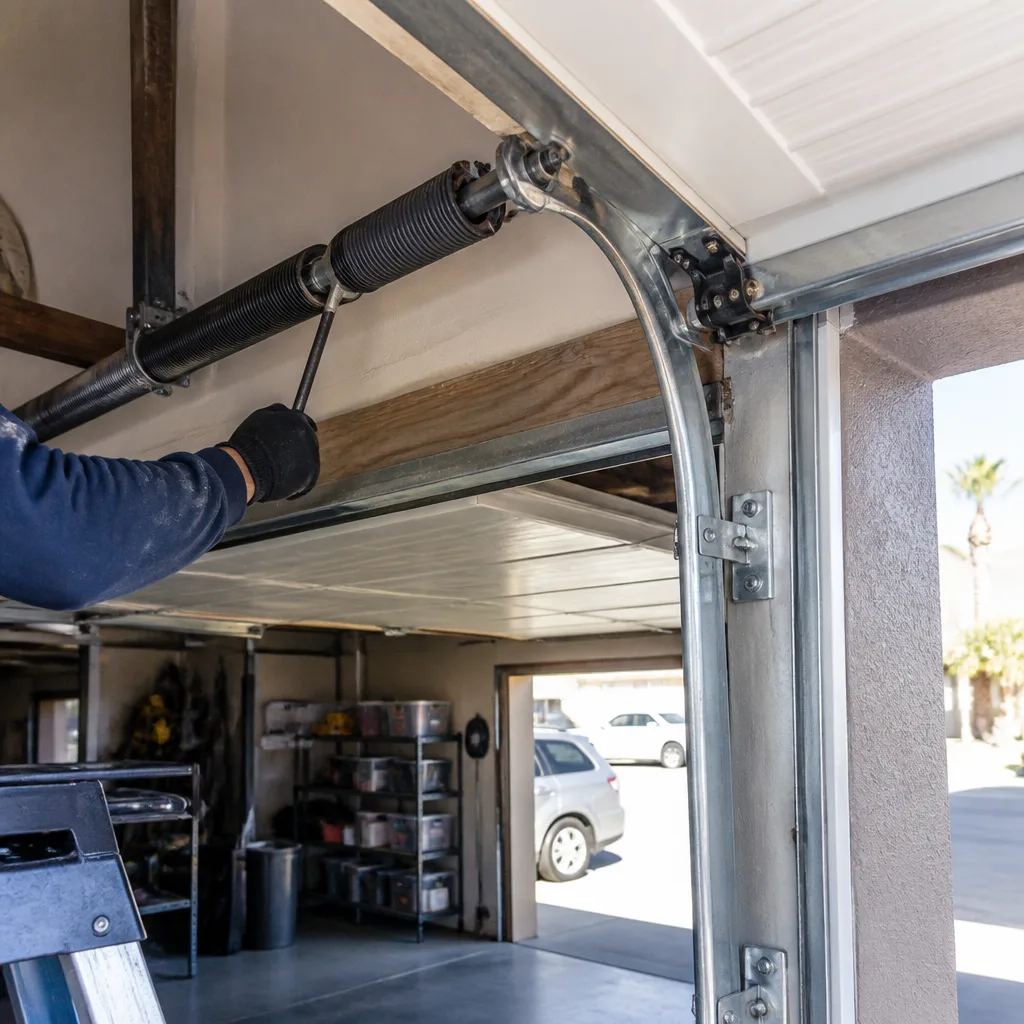
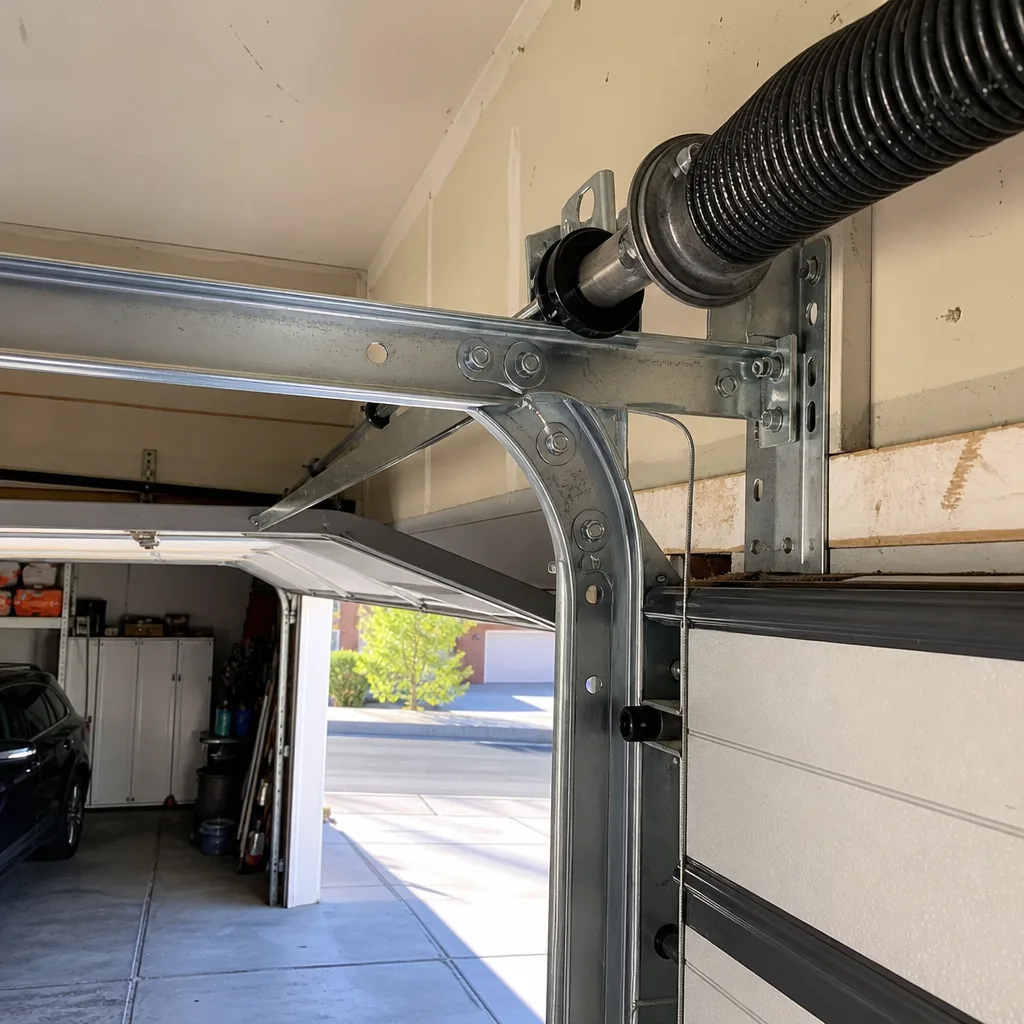
The torsion spring is the horizontal coil mounted above the closed door. It stores mechanical energy when the door closes and releases it when the door opens. Without it, your door opener motor is trying to lift 150 to 250 pounds of door with no help, which it wasn’t designed to do. Torsion springs are under extreme tension. They can store enough energy to seriously injure or kill a person if released improperly. Never attempt to adjust or replace one yourself. This is the single most dangerous component in your entire garage door system.
Extension Springs
Older or lighter garage doors use a pair of springs that stretch along the horizontal tracks on either side. They do the same job as torsion springs but through linear tension rather than rotational torque. Extension springs also carry lethal tension and should only be handled by a trained technician.
High-Tension Cables
The cables are the thin steel wires running along each side of the door, connecting the bottom brackets to the drum near the top. They carry weight and guide the door. When a spring snaps, cables often snap simultaneously because they take a sudden, massive load. Frayed or snapped cables are a safety hazard. Do not operate the door until a professional has assessed it.
Rollers
Rollers sit in the track and allow the door to move up and down. Nylon rollers with sealed ball bearings are the modern standard and run quietly. Worn or cracked rollers cause jerking, noise, and off-track doors. In Las Vegas, roller replacement every 4 to 6 years is reasonable given the dry heat and dust exposure.
Tracks and Brackets
The vertical and horizontal tracks guide the door, while brackets hold the tracks to the wall and ceiling. Concrete slab movement in Las Vegas, a common issue in older neighborhoods like Paradise and the University District, can cause track misalignment as the slab shifts. A door that suddenly binds or squeaks may have a track that’s moved a fraction of an inch.
Weather Seals
The bottom seal and side seals keep dust, heat, and pests out. In Las Vegas, these degrade faster than the door itself. If you see light under the bottom of your closed door, replace the seal. The Mojave dust that accumulates in a garage with failed seals gets into everything: your car, your storage, and eventually your home.
When to Replace vs. Repair a Las Vegas Garage Door
Not every broken garage door needs a replacement. Throwing a new door at a spring problem wastes money. Here’s how to tell the difference in Las Vegas conditions.
Repair makes sense when:
- The door itself is structurally sound, under 15 years old, and the issue is a spring, cable, roller, or track problem.
- The panels are in good shape with no warping, deep dents, or UV fade that bothers you.
- The door operates smoothly once the broken part is addressed.
- You’re happy with the current insulation level and style.
Replacement makes sense when:
- Multiple panels are dented, warped, or severely faded from Mojave sun exposure.
- The door is over 18 to 20 years old and uses an obsolete spring or track system that’s hard to source parts for.
- You want to upgrade from non-insulated to insulated, which is a common move in Las Vegas for homeowners tired of a 130°F garage in July.
- Your HOA has flagged the door and panel replacement isn’t feasible due to color or style unavailability.
Replacing a single panel in Las Vegas is often harder than in other markets because the sun fades paint differently across panels. A new panel next to old panels looks patchy, which triggers HOA complaints and lower resale value. A full replacement with a matching set avoids that entirely and often costs less per year of expected life than a partial fix.
Common Mistakes to Avoid
- Ignoring spring warning signs: A door that opens slowly or makes a loud bang when the spring snaps means the spring was already failing. If you hear grinding, clicking, or the door is heavier than usual, schedule an inspection before total failure. A snapped spring can damage the door itself when it lets go.
- Lubricating everything with the wrong product: WD-40 is not a garage door lubricant. It cleans but doesn’t lubricate. Use a lithium-based or silicone-based garage door lubricant on rollers, hinges, and springs. In Las Vegas, the dry climate means lubricants evaporate faster, so maintain every 6 months.
- Replacing only one spring: When a torsion spring fails, the other spring is usually near the end of its life too. Replacing only one means you’ll pay for another service call in 3 to 6 months. In Las Vegas heat, both springs fail on a similar timeline.
- Buying the cheapest spring online: A $40 spring from an online seller is rated for fewer cycles and often isn’t the right size for your door. Mismatched springs cause the door to operate unevenly, which then damages cables and tracks.
- Adjusting or replacing springs yourself: Torsion and extension springs carry forces that can shatter bone or cause fatal injuries. This isn’t a weekend DIY project under any circumstances. A trained professional has the right tools and training to safely wind and unwind springs.
- Not checking the company’s permanence: In Las Vegas, a company that can’t provide a physical address or a written guarantee is a risk. Transient operators disappear after a few months, and your warranty disappears with them. Look for a company that puts its guarantee in writing.
- Waiting weeks for a repair: A broken garage door in Las Vegas means a garage that can hit 120°F inside during summer. That heat damages everything stored there and makes the space unusable. A door that won’t open also creates a security issue: the garage is part of your home’s envelope.
When to Call a Professional
Call a professional the moment your garage door doesn’t operate smoothly, quietly, and consistently. That includes any loud noise during operation, visible fraying on cables, a door that’s heavier than usual when opened manually, or a spring that’s visibly broken. Also call if your door is off-track, if the bottom seal is letting dust and heat in, or if you’re buying a home in Las Vegas with an existing garage door you know nothing about. A door that’s been neglected in Nevada’s heat for years may look fine on the surface and be hiding a spring ready to snap. Marlow Garage Door Repair Las Vegas offers free estimates in Las Vegas. Call (725) 373-9798 to talk to a live person and get a written price before any work starts.
Frequently Asked Questions
Garage door spring replacement in Las Vegas typically costs $180 to $320 for a single torsion spring and $260 to $450 for a pair, with high-cycle springs adding $40 to $90. The exact price depends on spring size, cycle rating, and door weight, but a reputable Las Vegas company will give you a written price before any work starts. Call (725) 373-9798 for an exact quote, estimates are free.
Yes, most garage door companies in Las Vegas offer same-day service for common repairs like spring and cable replacement if you call before early afternoon. Marlow Garage Door Repair Las Vegas answers live 24/7 and will give you the real arrival window when you book, not a four-hour range. The repair itself usually takes 60 to 90 minutes once the tech arrives.
It shouldn’t. A reputable Las Vegas garage door company gives you a written price based on the door details you provide, then confirms or adjusts that price in writing before any work begins once the tech inspects the door. You always know the number before you approve the repair. At Marlow, the price on the invoice matches the price you agreed to, every time.
Most quality Las Vegas garage door companies stock common torsion springs, extension springs, cables, rollers, weather seals, and opener parts on the truck. That means most repairs are completed in a single visit. Uncommon parts, like a specific panel color or a specialty-brand opener board, may require a follow-up visit with a scheduled appointment.
Yes. Torsion springs and extension springs are under extreme tension and can cause serious injury or death if released improperly. This is the one garage door repair that should never be attempted without the proper training and winding tools. A professional garage door technician has the equipment to safely handle spring replacement.
A standard torsion spring rated for 10,000 cycles typically lasts 5 to 6 years in Las Vegas, compared to 8 to 10 years in milder climates. High-cycle springs rated for 20,000 to 30,000 cycles can last 9 to 11 years here. The shortened lifespan is due to extreme diurnal temperature swings that accelerate metal fatigue.
The Bottom Line
Las Vegas garage doors live harder than almost anywhere in the country. The Mojave heat cycle, dust storms, and shifting concrete slabs create failure patterns that generic garage door advice doesn’t address. The smart Las Vegas homeowner treats garage door maintenance as a scheduled priority, not an emergency. That means annual inspections, spring and roller replacement before failure, and working with a company that gives a written price, answers the phone 24/7, and backs its work with a real guarantee. When the day comes that your door refuses to cooperate, you’ll already know who to call. And that’s the entire point.
Written by Jaylen Ross, Owner at Marlow Garage Door Repair Las Vegas, serving Las Vegas since 2002.
See the difference
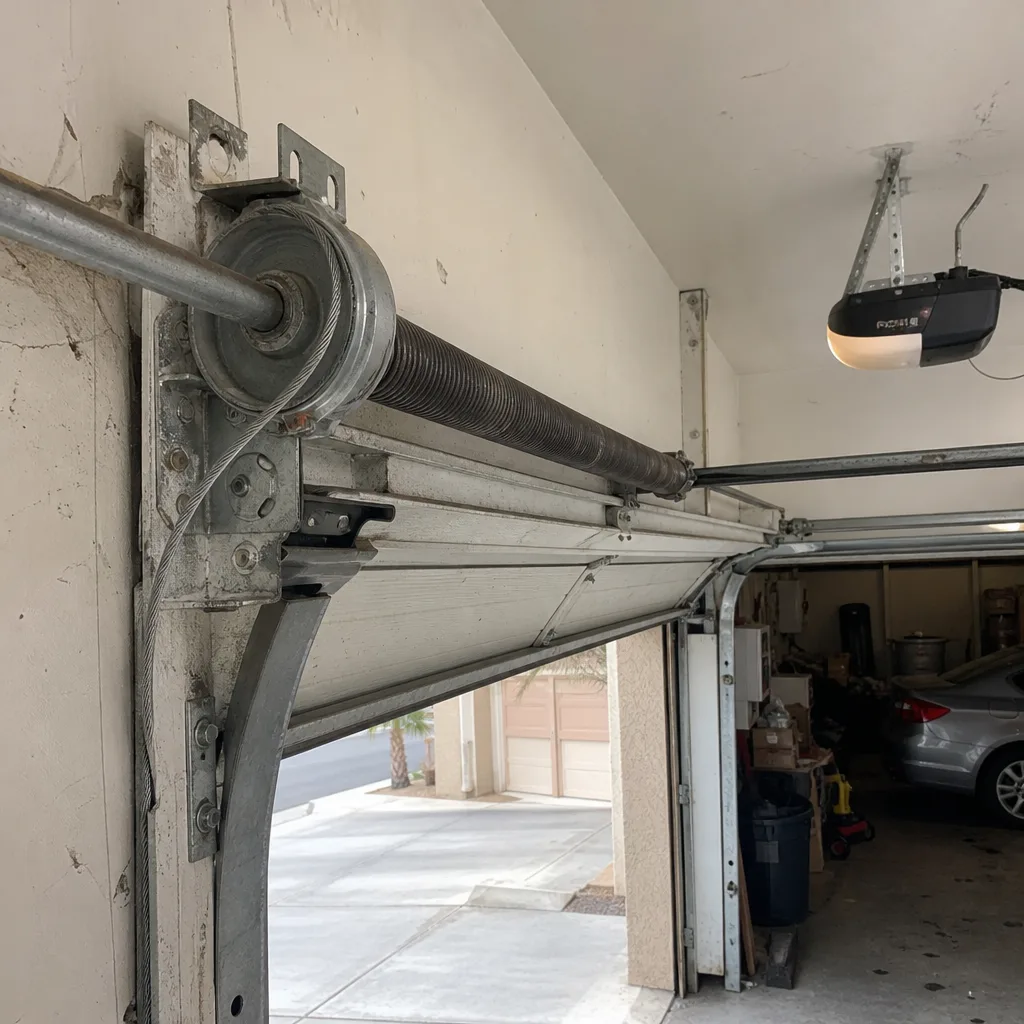 Before
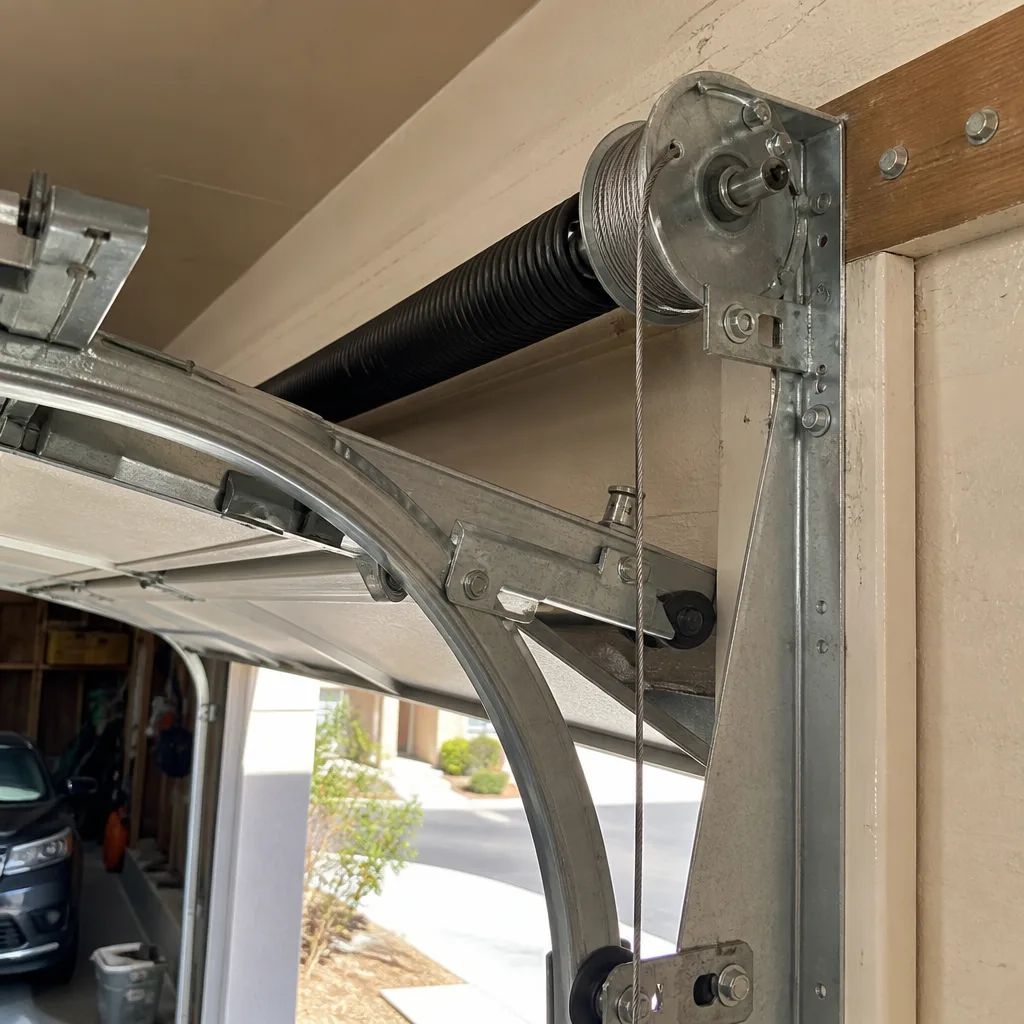 After
After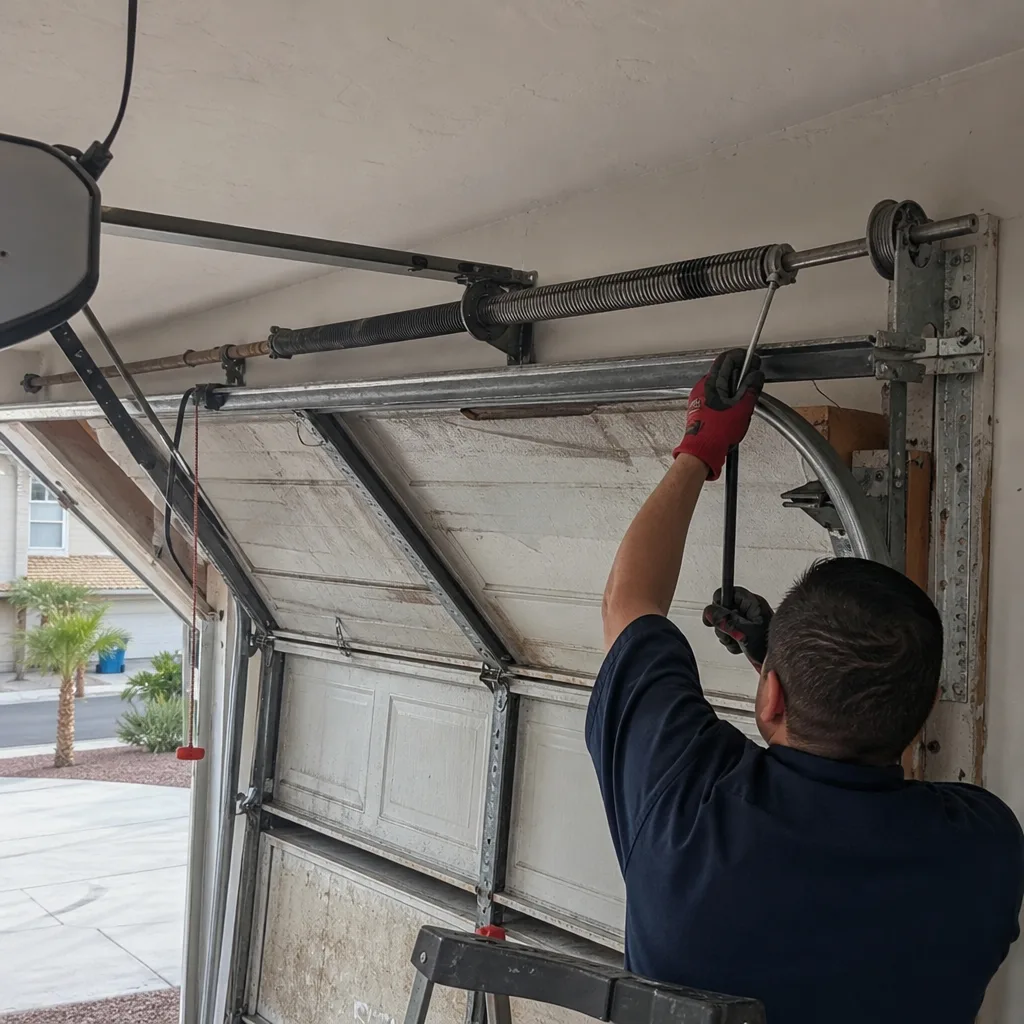 Before
 After
After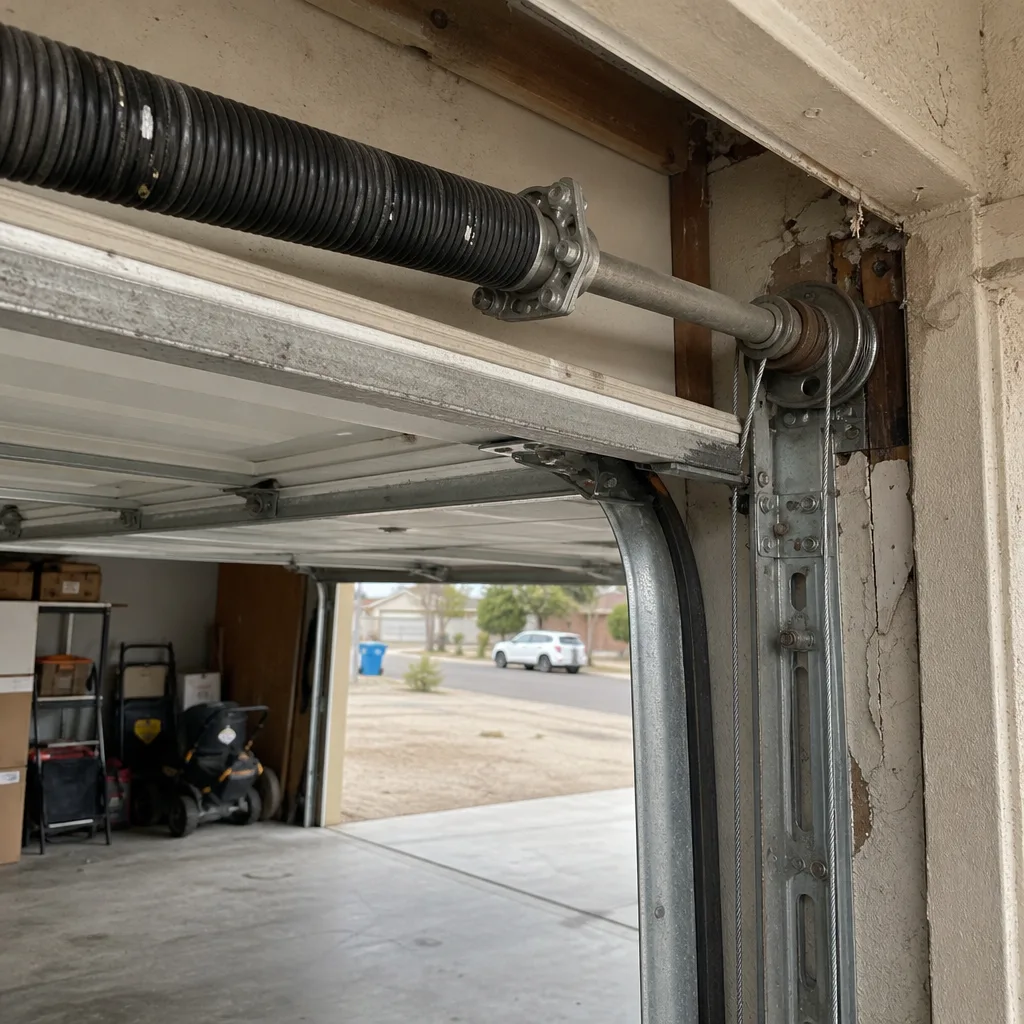 Before
 After
After