
Last updated October 16, 2026
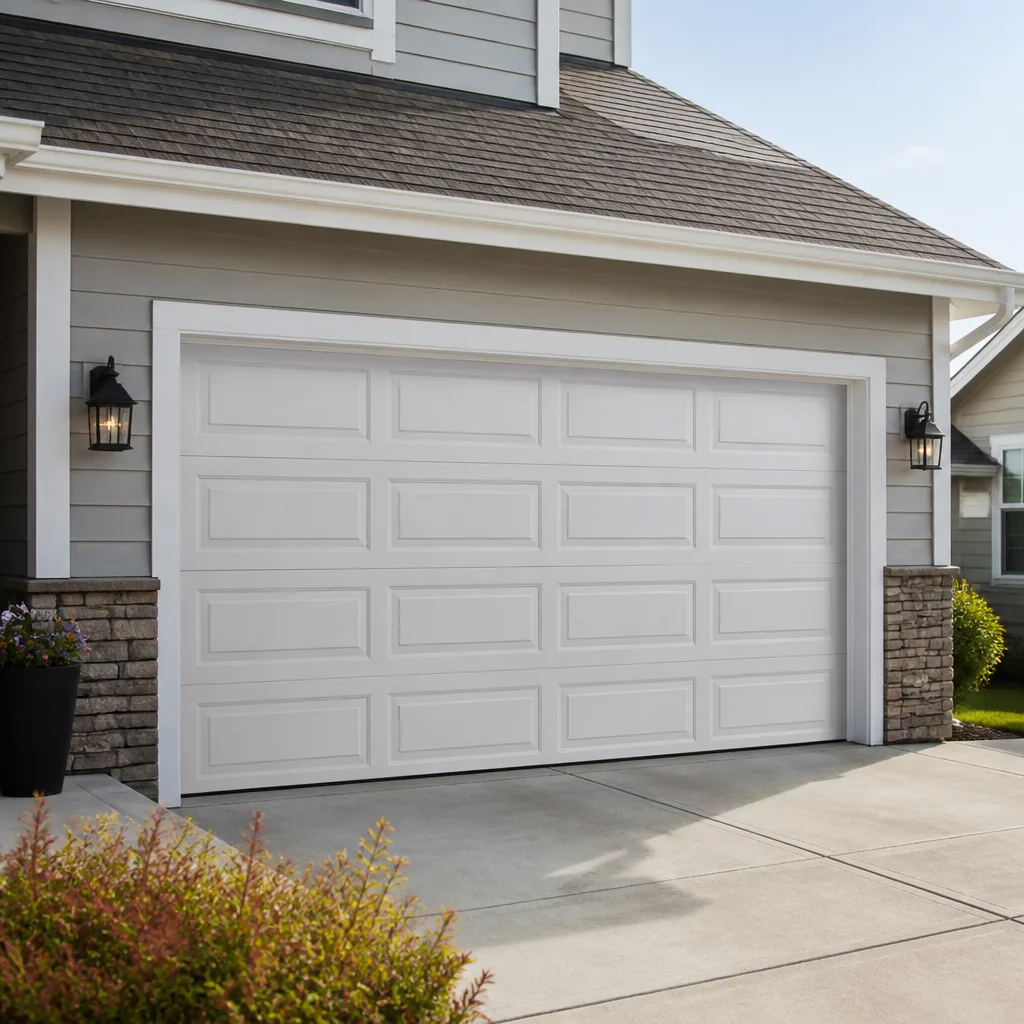 Raised-panel steel
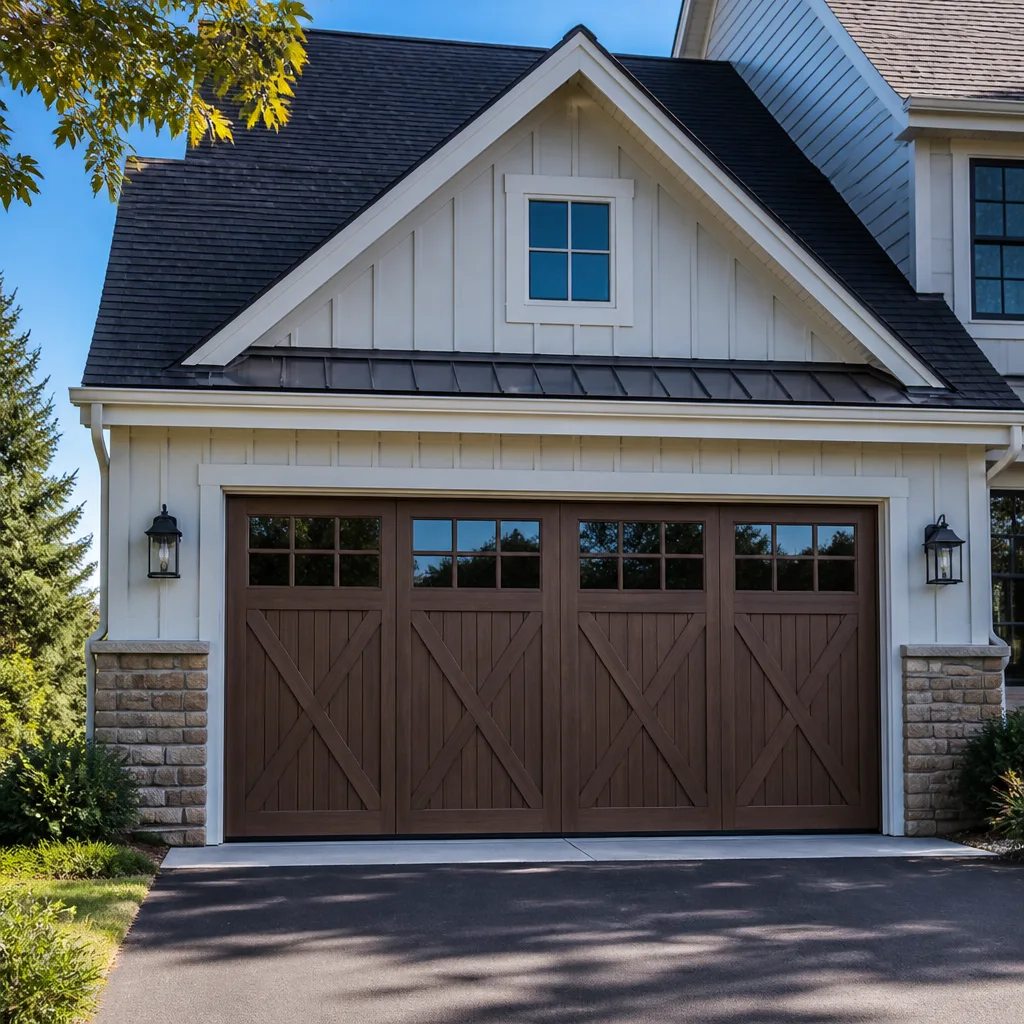 Carriage house
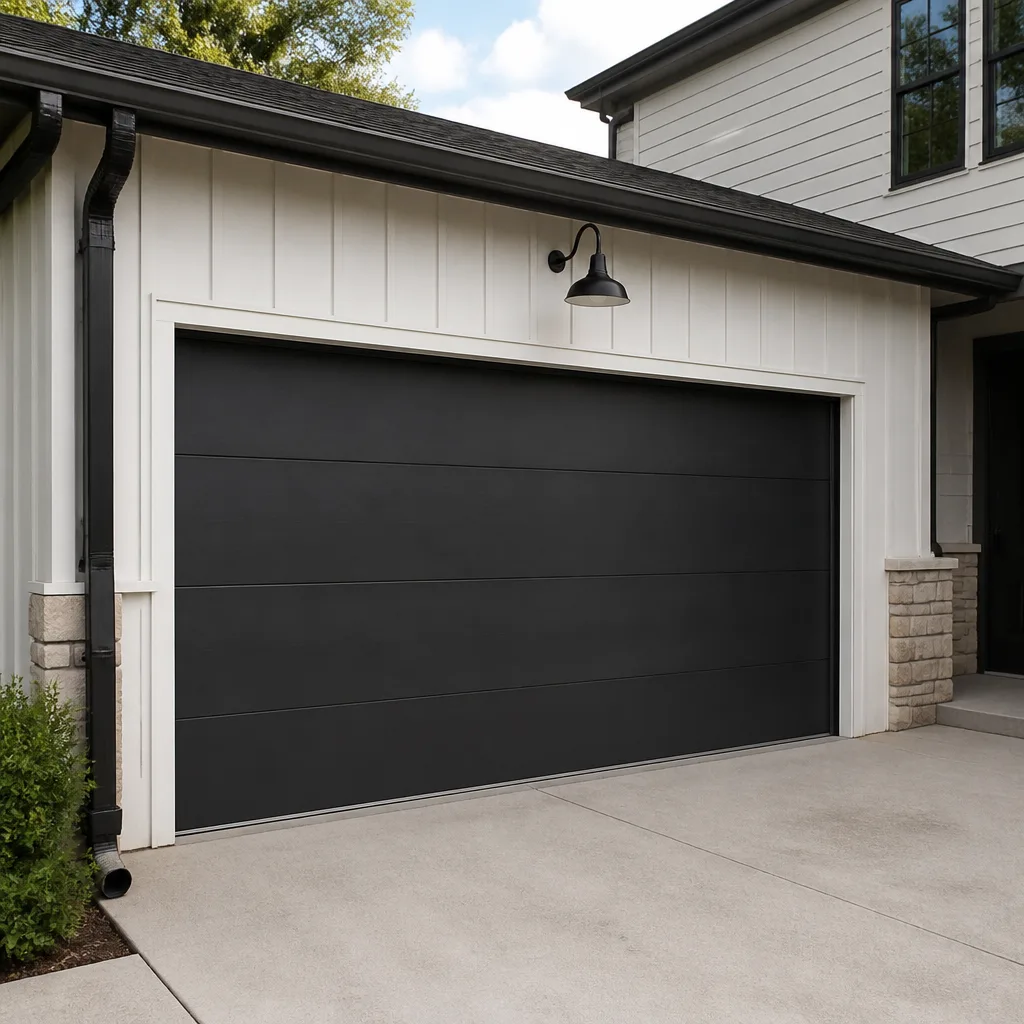 Modern flush
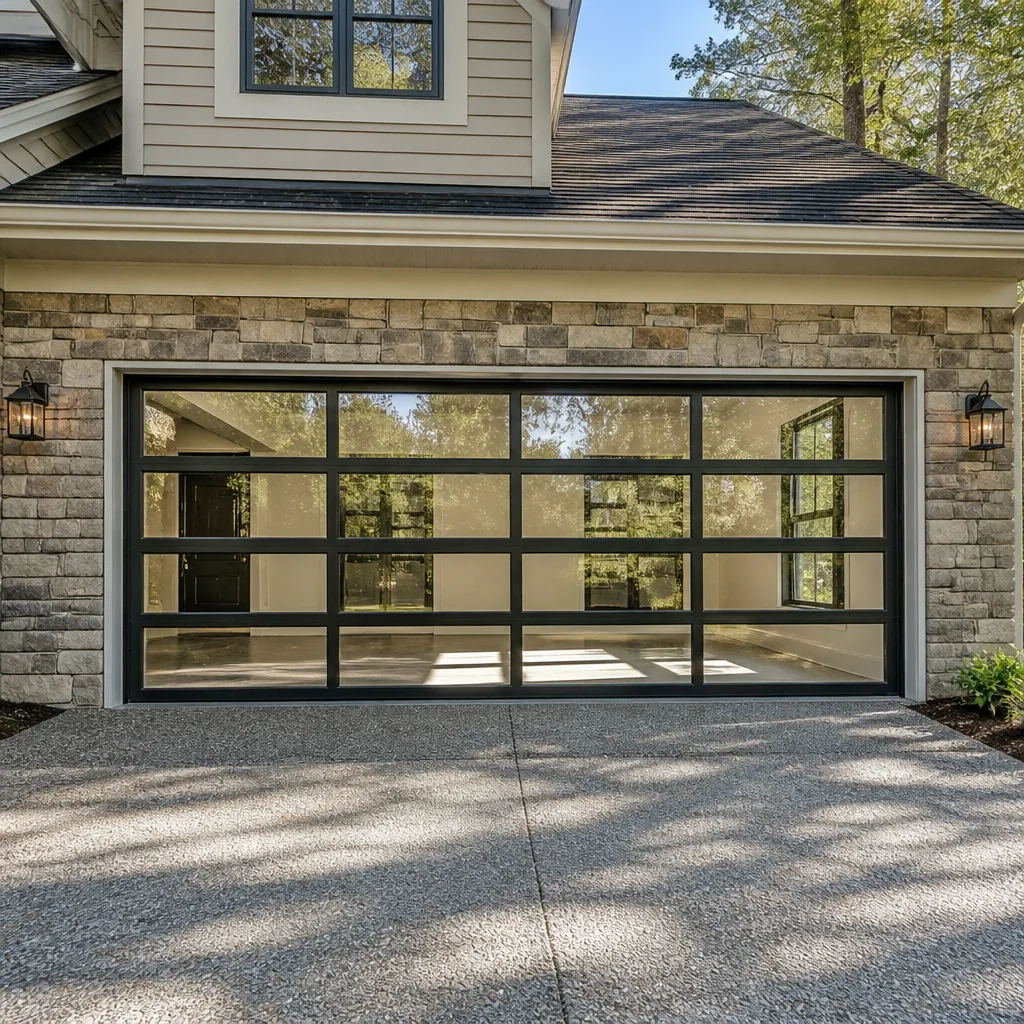 Full-view glass
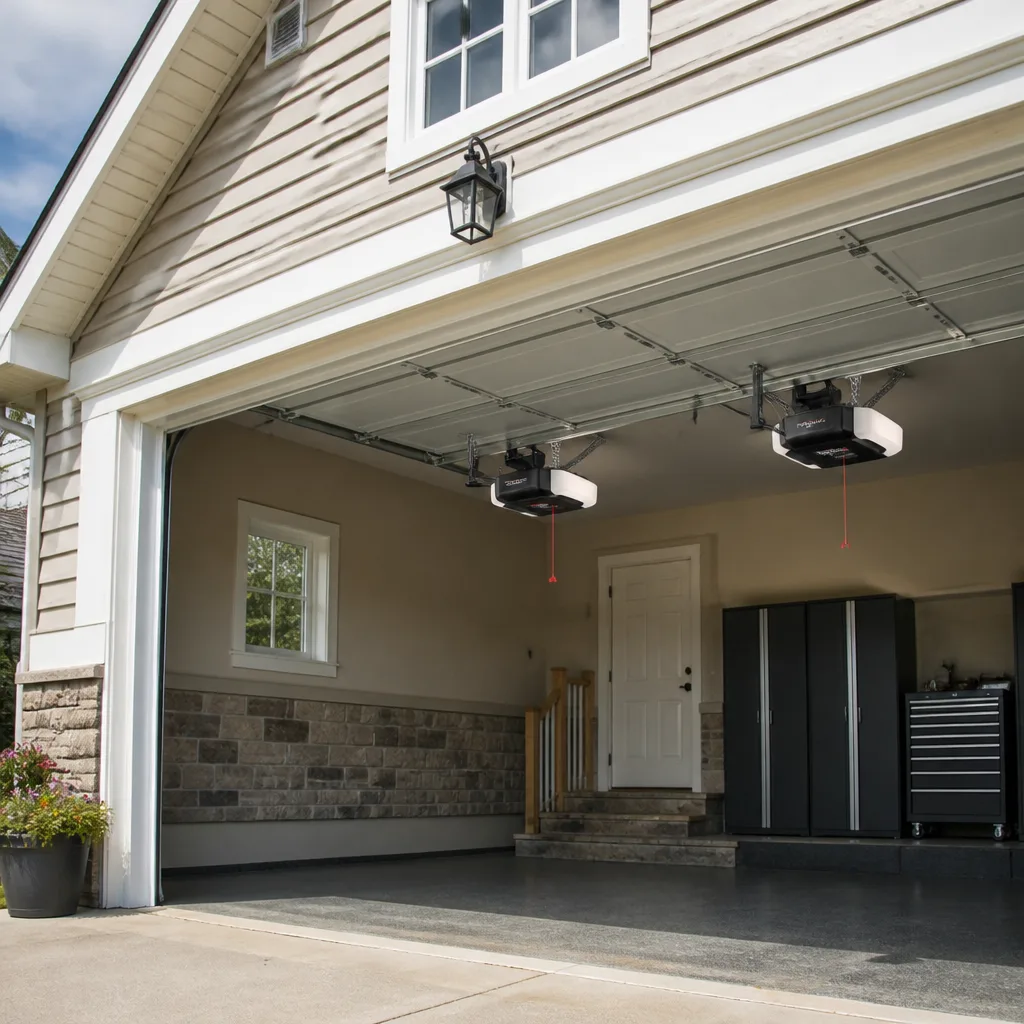 LiftMaster openers
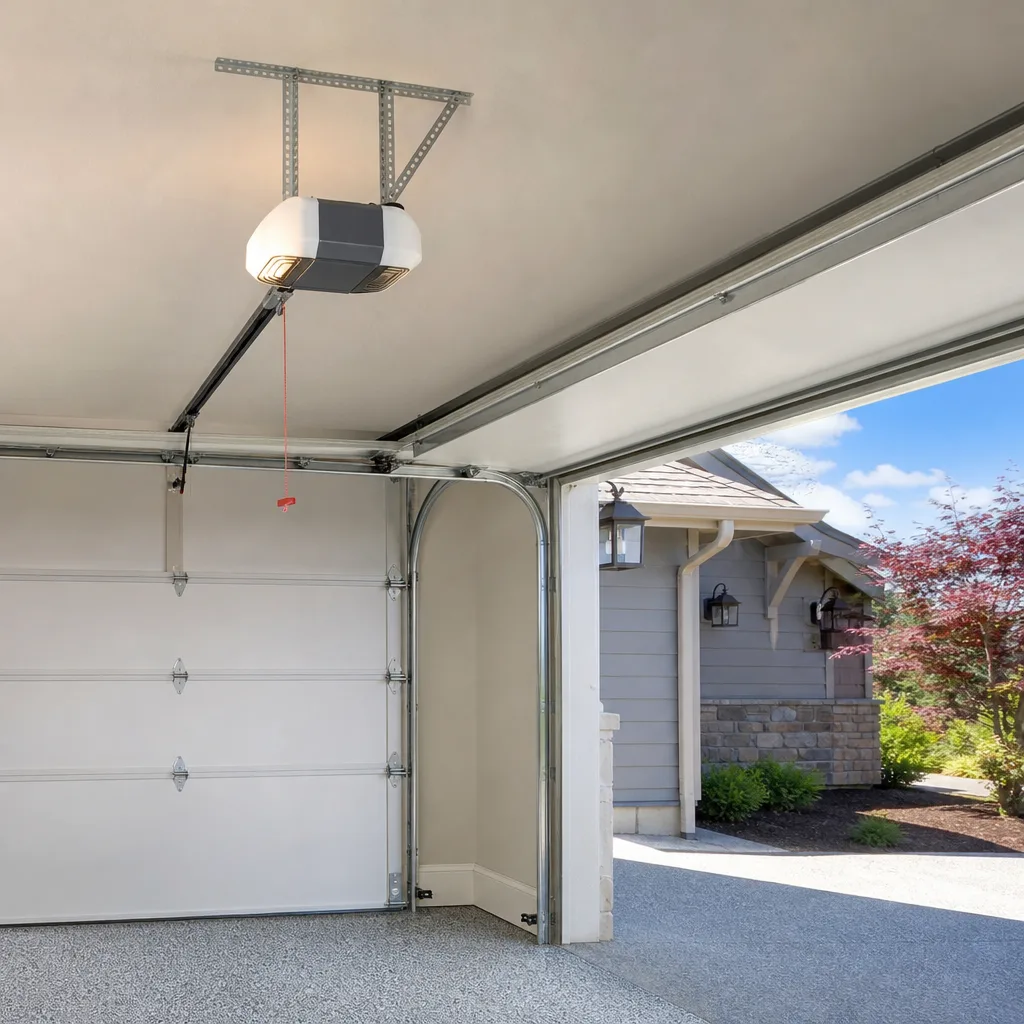 Chamberlain openers
Full 25-point door and opener safety check with every visit - springs, cables, rollers, tracks, and your LiftMaster or Chamberlain opener included
You get a price before we start. It does not change when the truck arrives.
Get your free estimateGarage Door Repair Maintenance Checklist for Las Vegas Homeowners
If your maintenance checklist says “lubricate every six months,” it was written for Portland, not Las Vegas. Here, lubrication breaks down in about 90 days. Mix that degraded lubricant with the fine caliche dust that blows through every Summerlin and Henderson neighborhood, and you’ve created an abrasive paste that grinds rollers, hinges, and bearings down to failure in weeks rather than years. This guide is built around the three actual killers of garage doors in Las Vegas: UV degradation, caliche dust infiltration, and thermal expansion stress. You’ll learn exactly what to check, when to check it, and which tasks genuinely need our Garage Door Repair services.
Styles & brands we work with
Quick Answer
A Las Vegas garage door needs a monthly dust-and-track inspection, lubricant reapplication every 90 days (not six months), and a balance test at least twice a year. The three things that destroy doors fastest here are UV-brittled weather seals, caliche dust grinding into rollers and hinges, and thermal expansion loosening track bolts. Most homeowners can handle the visual checks in about 10 minutes; spring work and cable replacement always require a trained technician. For How to Hire a Garage Door Contractor in Las Vegas: A Step-by-Step Guide, see our resources.
Table of Contents
- The Monthly Las Vegas Garage Door Checklist
- Seasonal Lubrication: What Survives a Las Vegas Summer
- Dust Seals and Weatherstripping: Your First Line of Defense
- The Five-Minute Balance Test (And What It Saves You)
- Torsion Spring Inspection: The Quarter-Turn Visual Test
- Track Cleaning: The Right Solvent for Desert Conditions
- Thermal Expansion: What Las Vegas Heat Does to Your Hardware
- Common Mistakes to Avoid
- When to Call a Professional
- Frequently Asked Questions
- The Bottom Line
The Monthly Las Vegas Garage Door Checklist
Ten minutes a month keeps a garage door alive in this climate. We’ve worked on doors across Las Vegas since 2002, from Spring Valley to Anthem, and the doors that fail are almost always the ones nobody looked at for six months. Here’s what to do every month, in order.
Step 1: Inspect the bottom weather seal. Run your hand along the rubber strip at the bottom of the door. In Las Vegas, UV light hardens this seal until it cracks and chunks break off. When that happens, dust blows in underneath, and your garage becomes an oven. A cracked seal also lets scorpions and crickets in, which matters in every Las Vegas neighborhood, from Aliante to Mountain’s Edge.
Step 2: Clean the track with a dry rag. Wipe the inside of both vertical tracks. You’re looking for gritty buildup. Caliche dust is alkaline, and it clings to any oil residue. If the rag comes away tan or white and the track feels gritty to the touch, it’s time for a proper cleaning (see the track cleaning section below).
Step 3: Check roller condition. Look at each roller where it meets the track. Steel rollers with visible rust or wobble need replacement. Nylon rollers that look flattened or cracked are failing. In our experience, cheap steel rollers rarely last three Las Vegas summers before they start grinding themselves and the track into powder.
Step 4: Inspect hinge bolts and track brackets. Thermal expansion and contraction, repeated hundreds of times a year, loosens bolts. Grab a 7/16-inch wrench and test each hinge bolt where sections of the door connect. If any turn with light pressure, snug them down. Do not overtighten; you can strip the threads in the thin metal.
Step 5: Open and close the door once, listening. Stand inside the garage while the door runs through a full cycle. You’re listening for grinding, squealing, or a rhythmic thumping. Squealing at the hinges means lubrication failed. Grinding at the rollers means dust got into the bearings. Thumping means the door is off balance, and you should stop using it until a balance test confirms what’s happening.
This monthly routine catches about 80% of the failures we see on emergency calls. The other 20% come from springs and cables, which is where the next sections matter. For a deeper look at what to watch for, read Garage Door Warning Signs: A Las Vegas Homeowner’s Reference Guide.
Seasonal Lubrication: What Survives a Las Vegas Summer
Garage door lubricant in Las Vegas either survives the heat or it doesn’t. White lithium grease turns to gum above 100 degrees. WD-40 is a solvent, not a lubricant, and it strips whatever protection was there. What actually works on torsion springs, hinges, and rollers in this climate is a silicone-based lubricant or a dedicated garage door spray rated for high temperatures. We recommend products specifically formulated for garage doors, and we reapply them every 90 days, not every six months like the generic checklists say.
Here’s the seasonal reality in Las Vegas:
- Summer (June through September): Lubricate every 60 to 75 days. The heat accelerates evaporation and chemical breakdown. After every stretch of 110-plus days, check the springs. If they look dry, they are dry.
- Fall (October through November): This is the most important lubrication of the year. The first cool nights cause metal to contract, and dry springs under tension are when failures spike. Lubricate thoroughly in October.
- Winter (December through February): Every 90 days is fine. The cold doesn’t degrade lubricant as fast, but dust keeps accumulating.
- Spring (March through May): This is dust season. The wind blows caliche through every garage in Las Vegas. Lubricate every 60 days, and wipe the tracks more often.
What to lubricate: the torsion spring (the horizontal coil above the door), each hinge pivot point, the bearing plates at each end of the spring tube, and the top of each rail where the roller travels. Do not lubricate the bottom of the rail. Gravity is your friend there, and lubricant on the bottom rail just collects dust and turns into grinding paste.
What not to lubricate: the belt or chain on the opener. Belts are self-lubricating and adding anything destroys them. Chains need a light coat only if they’re noisy, and that’s rare. The photo-eye sensors: spray them and you’ll be recalibrating them.
One more Las Vegas-specific note: if your garage faces west and bakes in afternoon sun, your door’s metal components run 20 to 30 degrees hotter than the ambient temperature. That west-facing garage in Summerlin or Centennial Hills needs lubrication on the aggressive end of the schedule.
Dust Seals and Weatherstripping: Your First Line of Defense
The weather seal at the bottom of your garage door does more in Las Vegas than keep water out. It keeps dust out, and that’s the bigger battle. A single gap of a quarter inch at the bottom corner lets enough caliche dust in over one windy week to coat everything in your garage, including the moving parts of your door.
Here’s how to inspect your seals properly:
- Close the door completely. Get down at ground level and look along the bottom edge. You’re checking for light shining through anywhere. Any visible gap means the seal has failed.
- Pinch the rubber seal. Healthy rubber feels flexible and returns to shape. UV-degraded rubber feels hard, waxy, or crumbly. If pieces flake off when you pinch it, the seal is done.
- Check the side and top weatherstripping. These strips run along the door frame. In Las Vegas, the heat makes the adhesive backing fail and the strips peel away. Press along the outside edges. If any section moves or bows, it needs reattaching or replacing.
- Look at the threshold. Concrete settles in Las Vegas, and a door that once sealed perfectly can develop a half-inch gap at one corner within two years. If the gap is uneven, the seal needs shimming or the door needs adjustment.
Replacing a bottom seal is a job most confident DIYers can handle. The seal slides into a T-channel along the bottom of the door, and replacements cost $20 to $50 at any hardware store in Las Vegas. The trick is matching the right T-channel size for your door brand. A seal that’s too loose will fall out. One that’s too tight will tear during installation. If you’re not sure what you’re looking at on your LiftMaster-equipped door or any other setup, a quick call to a professional avoids buying the wrong part twice.
The Five-Minute Balance Test (And What It Saves You)
An unbalanced garage door is the single most expensive problem most Las Vegas homeowners never know they have. When a door goes out of balance, the opener motor works harder to lift it. That extra strain takes years off the motor’s life, and in Las Vegas heat, motors already run hot. A badly balanced door can burn out a 10-year opener in 3.
Here’s the five-minute test:
- Disconnect the opener. Pull the red emergency release cord while the door is closed. This disengages the door from the opener carriage.
- Lift the door manually to waist height. Grab the bottom handle or the side and lift. A balanced door moves smoothly with moderate effort and, this is the key part, stays where you leave it.
- Release the door at waist height. A properly balanced door will hold its position or drift very slowly either way. If the door slams down, the springs are weak or broken and the door is dangerously unbalanced. If the door shoots upward, the springs are over-tensioned.
- Repeat at chest height and just above knee height. The door should hold at all three positions within a few inches of drift. More than 6 inches of drift means the balance is off.
What does an off-balance door cost you over 12 months in Las Vegas? A replacement opener motor runs $250 to $600 installed. Premature roller wear adds another $100 to $200. The spindle and bearing wear adds more. Versus the $150 to $290 for a spring replacement, done properly, by a technician who knows the exact tension your door weight requires. That’s the math. We’ve replaced hundreds of openers in Las Vegas where the real culprit was a spring that never got adjusted after the last replacement. The full scope of garage door repair in Las Vegas starts with balance, because everything else breaks faster without it.
One warning: if the door is off balance and you keep using the opener, you’re not just wearing out the motor. You’re stressing the cable spools unevenly, which leads to cable slip and eventually a door that drops on one side. We’ll cover cable specifics in the next section, but the balance test is the early detection system for all of it.
Torsion Spring Inspection: The Quarter-Turn Visual Test
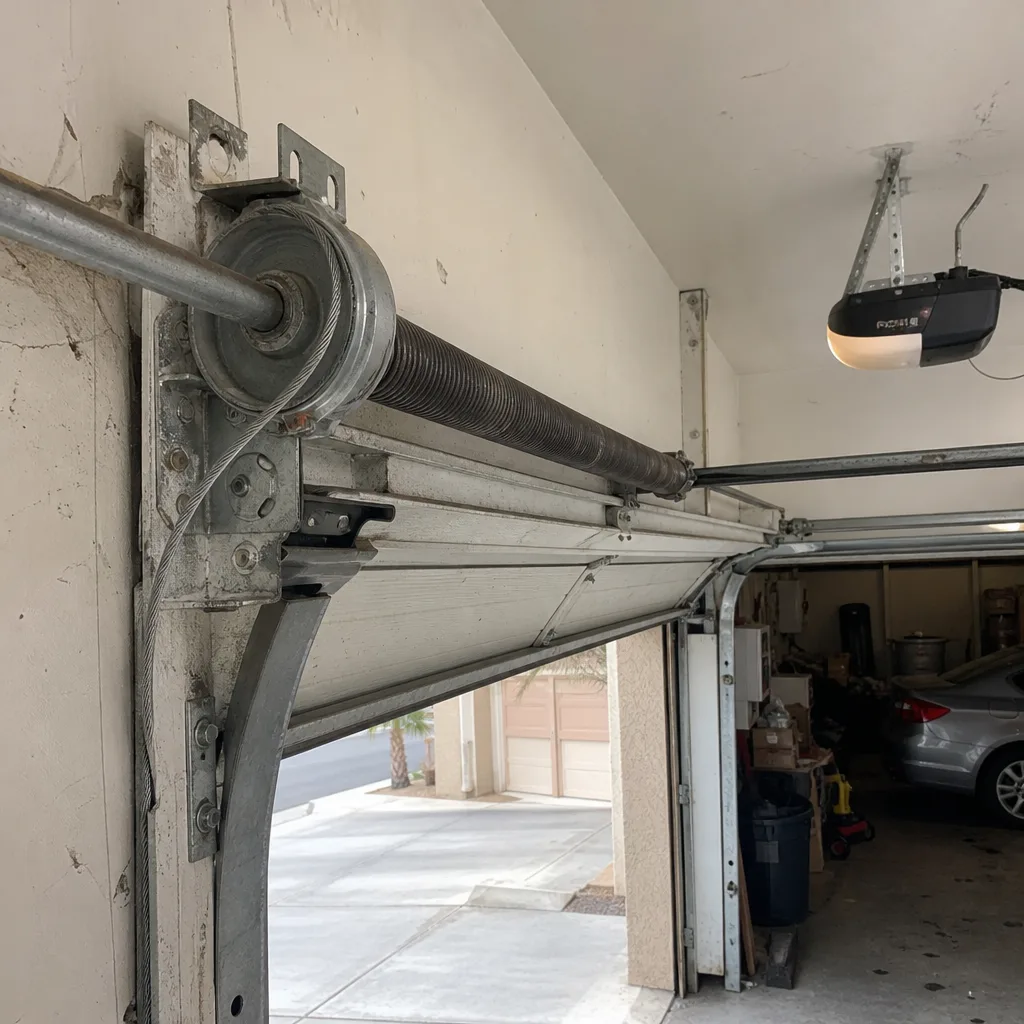
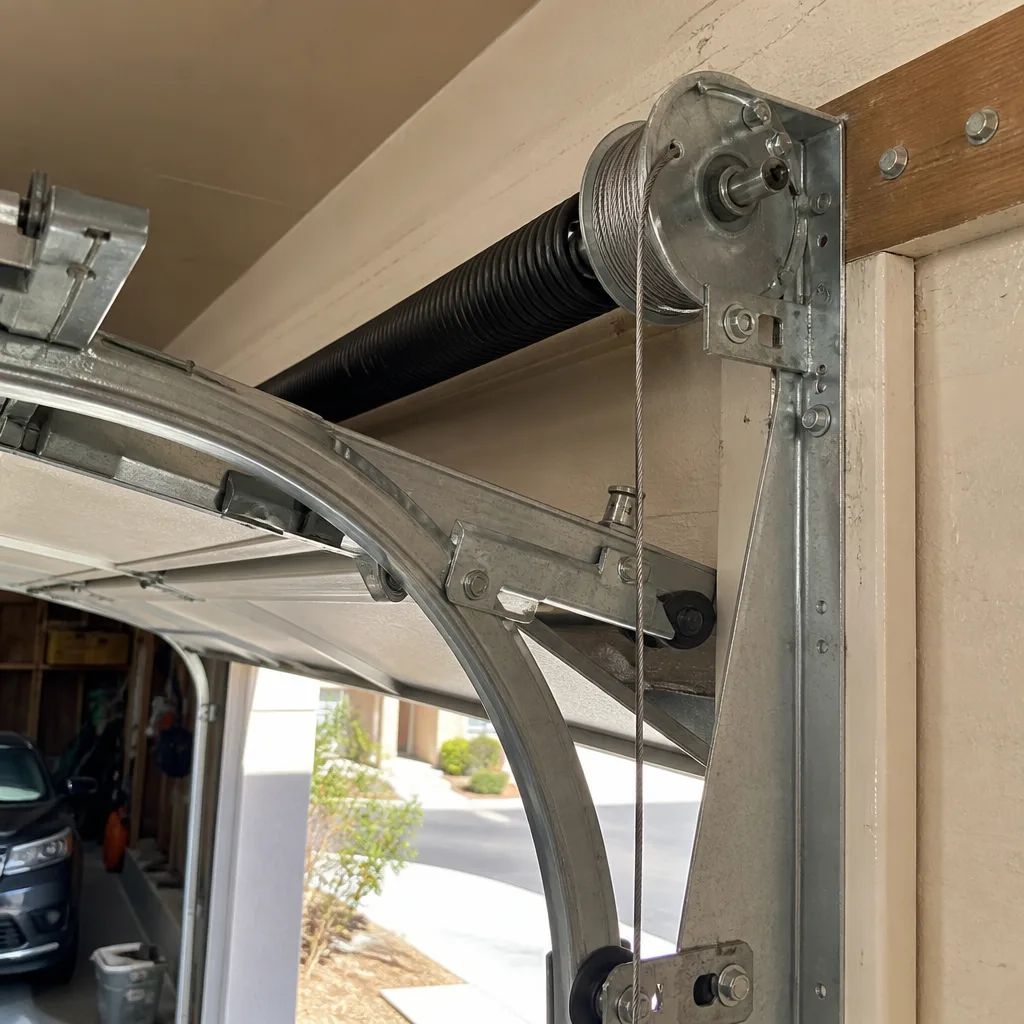
The torsion spring is the horizontal coil above your garage door that does most of the lifting. It’s under enormous tension, and when it fails, it fails violently. A spring snapping sounds like a gunshot inside an enclosed garage, and it’s the single most common emergency call we run in Las Vegas, right up there with cable breaks.
Do not touch the torsion spring. Do not attempt to adjust it. Do not try to remove it. The tension in a wound torsion spring can kill you. The quarter-turn test below is a visual inspection only, and it works for every garage door from Craftsman to Raynor.
Here’s what to look for on a quarterly basis:
- Look at the gap between coils. Stand on a ladder, not directly under the spring, and look at the coil. On a healthy spring, the coils are evenly spaced and close together. If you see a visible gap between two adjacent coils, wider than the others, the spring is beginning to separate. That’s the early warning sign of failure.
- Look at the spring’s color and surface. A spring with surface rust is not necessarily failing, but rust plus a widened coil gap means replacement time. In Las Vegas, garages with pool chemicals stored nearby see accelerated rust on springs because chlorine compounds are corrosive. Ventilate aggressively or store chemicals outside.
- Look at both springs if you have two. Most double-car doors have two springs, one on each side. If one looks newer than the other, it was replaced separately. That’s a red flag, because the older spring is now doing less work and the newer spring is overworking. Springs should be replaced in pairs whenever possible.
- Count the cycles. Garage door springs are rated in cycles, usually 10,000 to 20,000 for quality springs. The average Las Vegas homeowner cycles their door three to four times a day, sometimes more with teenagers and landscapers coming and going. That’s 1,200 to 1,500 cycles a year. A 10,000-cycle spring lasts about seven to eight years. If your springs are older than that, start planning for replacement before they snap.
If you see any coil separation, any rust with separation, or if one spring looks different from the other, call a professional. Spring replacement in Las Vegas typically runs $150 to $290 per spring depending on the type and size, and it’s a 30-to-60-minute job for a trained technician. Never, under any circumstances, attempt to unwind or rewind a torsion spring yourself. The specialists at a garage door spring repair service in Las Vegas do this daily with the right winding bars and decades of accumulated knowledge about exactly how many quarter-turns each door weight requires.
Here’s our own experience, stated plainly: we have never once been called to a home where a DIY spring attempt succeeded. We have been called to several where the landlord or the previous owner tried it and left behind a bent torsion tube or a partially wound spring that was more dangerous than a broken one. This is the one task where the professional call isn’t a suggestion, it’s a safety requirement.
Track Cleaning: The Right Solvent for Desert Conditions
The two vertical tracks that guide your door up and down are the lungs of the system. In Las Vegas, they fill with caliche dust, which is not just any dust. Caliche is calcium carbonate, the same stuff that forms hardpan layers in the desert. It’s abrasive, it’s alkaline, and it bonds to oil residue like glue.
Here’s the right way to clean tracks in this climate, and it matters more than any other climate in the country because the dust volume is higher, the dust is more abrasive, and the heat bakes it on.
Step 1: Dry-clean first. Use a dry microfiber rag or a soft brush to wipe out the loose dust. This removes the top layer without creating sludge. Do this every month. It takes 60 seconds per side.
Step 2: Use the right solvent for deep cleaning. When the track feels gritty even after dry-wiping, you need a solvent. The right product is a non-oil-based degreaser, which you can find at any auto parts store in Las Vegas. Spray lightly onto the rag, not the track, and wipe. The goal is to dissolve the oily dust residue without leaving a new oil film. An oil film on a vertical track in Las Vegas collects dust and becomes abrasive paste within days.
Step 3: Never use WD-40 on tracks or rollers. WD-40 is a water displacer and solvent. It strips any remaining protective film and evaporates, leaving bare metal that rusts faster and attracts dust more readily. Any checklist that recommends WD-40 for garage door tracks is wrong for this climate. Full stop.
Step 4: Clean the track bends. The curved section at the top of each track collects the most dust because it’s the hardest to reach. A stiff pipe cleaner or a small brush works. This is also where hardened lubricant drips down from the roller bearings, so you’re cleaning two problems at once.
Step 5: Inspect the track alignment while you’re there. Look down the length of each track from above or below. Any bow, twist, or wide spot signals that a bracket loosened and the door has been running against misaligned track. Misaligned track accelerates roller wear and, in the worst cases, allows the door to jump the track entirely. We’ve pulled doors back onto their tracks in every Las Vegas neighborhood you can name, and the root cause is almost always a loose bracket that never got checked.
For homeowners with Wayne Dalton or Clopay doors, track geometry is brand-specific. A track from another manufacturer will not interchange correctly, and forcing one is how doors end up off-track. The rule we give every customer: if the track needs more than a bracket tightening or a cleaning, that’s a garage door repair call, not a DIY project.
Thermal Expansion: What Las Vegas Heat Does to Your Hardware
Las Vegas has the most aggressive thermal expansion cycle of any major city in the continental United States. Summer days hit 110 degrees. Summer nights drop into the 80s. That’s a 30-degree daily swing on the metal door itself, and the door surface runs hotter than the air. A west-facing door in direct afternoon sun can reach 150 degrees on the surface.
Steel expands when heated. Aluminum expands more. Every joint, hinge, bracket, and bolt on your door moves a tiny amount every day, and after 365 of those cycles, bolts work loose. Here’s what thermal stress actually does to your door over a Las Vegas year, and what to check.
Loose track brackets. The bolts holding the track brackets to the wall are the first to loosen. Check them every 90 days. If you can turn a bolt with light pressure from a wrench, it’s loose. Tighten to snug, not tight, because overtightening into drywall anchors causes its own problems.
Hinge wear at panel joints. The hinges connecting each panel section take the most stress as panels expand and contract against each other. A door that pops or creaks at the panel joints is telling you the hinges are wearing. Inspect for visible shavings or metal dust around the hinge pins. That powder is metal-on-metal wear from expansion movement.
Weatherstrip adhesive failure. The side and top weatherstripping is held on with pressure-sensitive adhesive, and Las Vegas heat melts the adhesive within two to three summers. Once one strip peels at the corner, the rest follows, and you lose the dust barrier.
Spring fatigue acceleration. Springs are heat-treated steel, but the heat-treatment process has limits. Sustained 140-degree door surface temperatures, cycling every day, slightly decreases spring lifespan compared to coastal climates. A spring that would last 10 years in San Diego might last seven in Las Vegas on a west-facing door. This is not a reason to panic, but it’s a reason to inspect springs quarterly and plan for replacement by year seven.
What you can do: shade your garage door. A simple awning or a shade structure over a west-facing door drops the surface temperature by 20 to 30 degrees, which extends the life of every component, from springs to seals. This is standard advice we give in Summerlin, The Lakes, and anywhere else where the afternoon sun hits the garage head-on. The cost of a shade structure is a fraction of the cumulative repair bill over the life of a door that bakes in direct sun every afternoon.
Common Mistakes to Avoid
- Using WD-40 as a lubricant. WD-40 strips protection and evaporates. In Las Vegas dust conditions, it actively makes things worse within a week. Use a silicone-based garage door lubricant instead.
- Lubricating the bottom rail of the track. Oil on the bottom rail collects dust and creates grinding paste. Lubricate the top rail and rollers only.
- Ignoring a noisy door. A door that squeals or grinds is failing in slow motion. Every month you ignore it adds wear that takes years off the components. Noise is the earliest diagnostic signal your door gives you.
- Trying to adjust torsion springs without training. We said it before, and we’ll say it again: torsion springs carry lethal tension. This is the one DIY mistake in this entire guide that can kill you. Call a professional, always.
- Replacing one spring instead of both. On a two-spring door, replacing one spring means the other, older spring now does unequal work and fails sooner. Pair replacement costs slightly more now and saves a second service call in 12 to 18 months.
- Checking the door only when it breaks. The whole point of this checklist is that Las Vegas conditions destroy doors on a schedule. Monthly checks take 10 minutes. The alternative is an emergency call in 110-degree heat, and emergency calls in August are the worst version of this experience.
- Forcing a door that resists manual operation. If the door doesn’t move smoothly when you pull the release cord and try to lift it manually, something is wrong. Forcing it bends panels, strips hinges, and makes a $150 spring adjustment into a $600 multi-part repair.
When to Call a Professional
Some things on a garage door are genuinely dangerous, and some are simply beyond what a homeowner should attempt with basic tools. Call a professional for any torsion spring issue, every cable problem, any track realignment beyond a loose bracket, and any door that is off balance. These are the failures where the margin for error is measured in inches and the risk of injury is real. A door that comes off its tracks or drops from a broken spring can injure or kill. That’s not dramatic language; that’s the nature of the equipment. For everything else on this checklist, the monthly tasks and the cleaning and the seal replacement, most homeowners in Las Vegas can do the work with confidence. But the moment you’re unsure, the moment the door doesn’t behave the way this guide says it should, stop and call someone who does this every day. Marlow Garage Door Repair Las Vegas offers free estimates in Las Vegas – call (725) 373-9798. We’ll give you a written price before any work starts, and the 365-Day Done Right Promise covers every repair for a full year. If it’s not right, we make it right, at no charge.
Frequently Asked Questions
Every 60 to 90 days, depending on the season. Summer and spring dust season require lubricating every 60 days, while fall and winter can stretch to 90. The generic six-month rule does not apply in Las Vegas heat and dust. Use a silicone-based garage door lubricant, never WD-40. Call (725) 373-9798 if you want a professional lubrication and inspection, and we’ll show you our written price before we start.
A professional tune-up and inspection in Las Vegas typically runs $75 to $150, depending on what’s included. Spring replacement runs $150 to $290 per spring, roller replacement runs $10 to $25 per roller, and weather seal replacement runs $30 to $70 for parts. We quote every job with a written price before work begins, so the number you agree to is the number you pay.
Yes, for the monthly tasks: track cleaning, dust seal inspection, hinge bolt tightening, and most weatherstrip replacement are all DIY-friendly. The balance test and the quarter-turn spring test are visual inspections anyone can do. The line is crossed at anything involving torsion springs, cables, or track realignment – those require professional tools and training.
An off-balance door doesn’t stay where you leave it when you open it manually. It either drops or rises on its own. This means the springs are not correctly tensioned for the door’s weight. Over 12 months, an off-balance door wears the opener motor, rollers, and hinges at roughly three times the normal rate. Call for a balance adjustment or spring replacement before the damage compounds.
Heat causes metal to expand, and expanded metal puts more pressure on hinges, rollers, and brackets. Combined with dried lubricant from the heat, that’s why Las Vegas garage doors get louder in July and August. Lubricating more frequently in summer and tightening loose bolts every 90 days keeps the noise down.
Yes. We’re certified on eight major brands: LiftMaster, Chamberlain, Genie, Clopay, Amarr, Wayne Dalton, Craftsman, and Raynor. See our Marlow Garage Door Repair Las Vegas home page or call (725) 373-9798 and a real person answers, 24/7. We’ll tell you immediately whether we can service your specific door, and the answer is almost always yes.
The Bottom Line
A garage door in Las Vegas fails differently than a garage door anywhere else. UV destroys seals, caliche dust destroys rollers and tracks, and thermal expansion loosens everything. The monthly checklist takes 10 minutes, the lubrication schedule runs every 60 to 90 days, and the balance test and spring inspection run quarterly. Do those things and your door lasts years longer, your opener motor doesn’t die early, and you avoid the August emergency call that nobody wants. Skip them and the desert takes its payment one part at a time. When something needs professional attention, whether it’s a spring, a cable, or a door that just won’t balance, contact our cable repair specialists in Las Vegas or call (725) 373-9798 for a free estimate and a written price before any work starts.
Written by Jaylen Ross, Owner at Marlow Garage Door Repair Las Vegas, serving Las Vegas since 2002. Browse more guides & resources.
See the difference
 Before
 After
After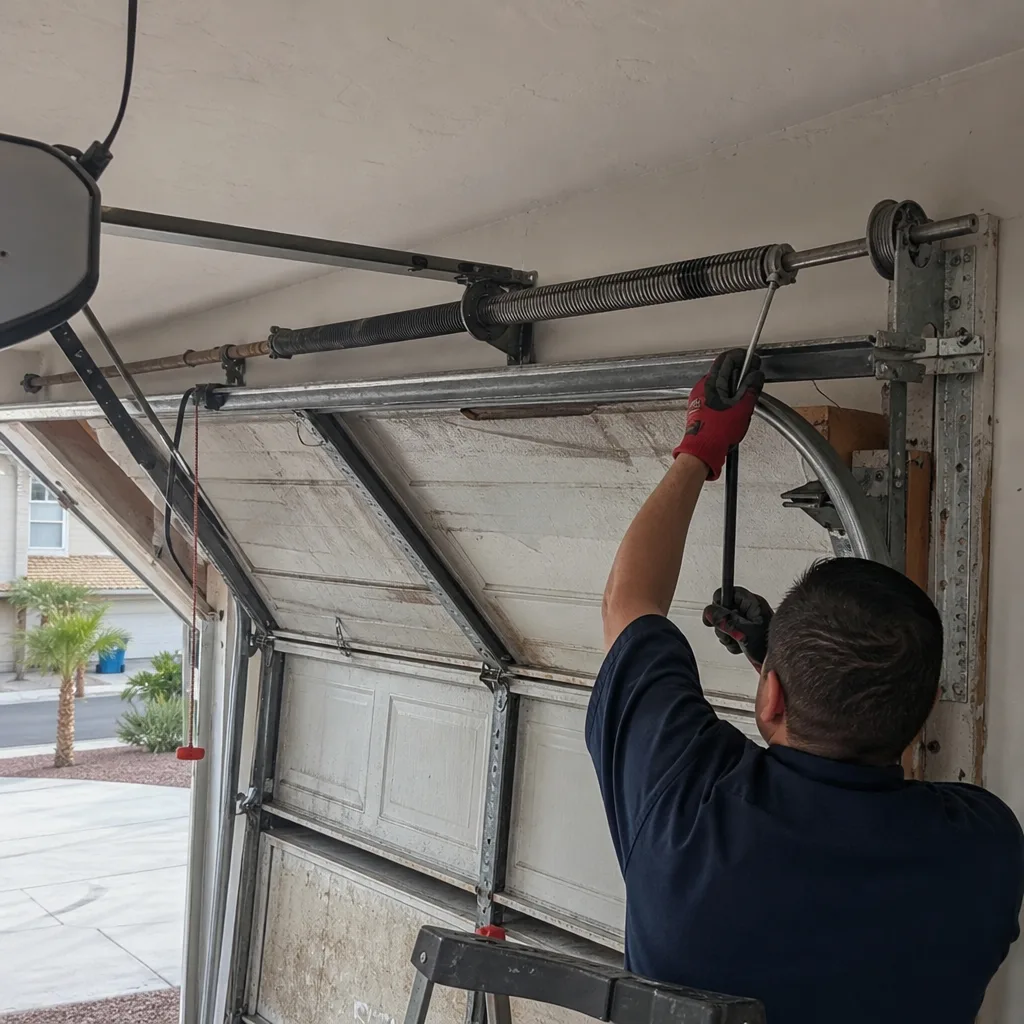 Before
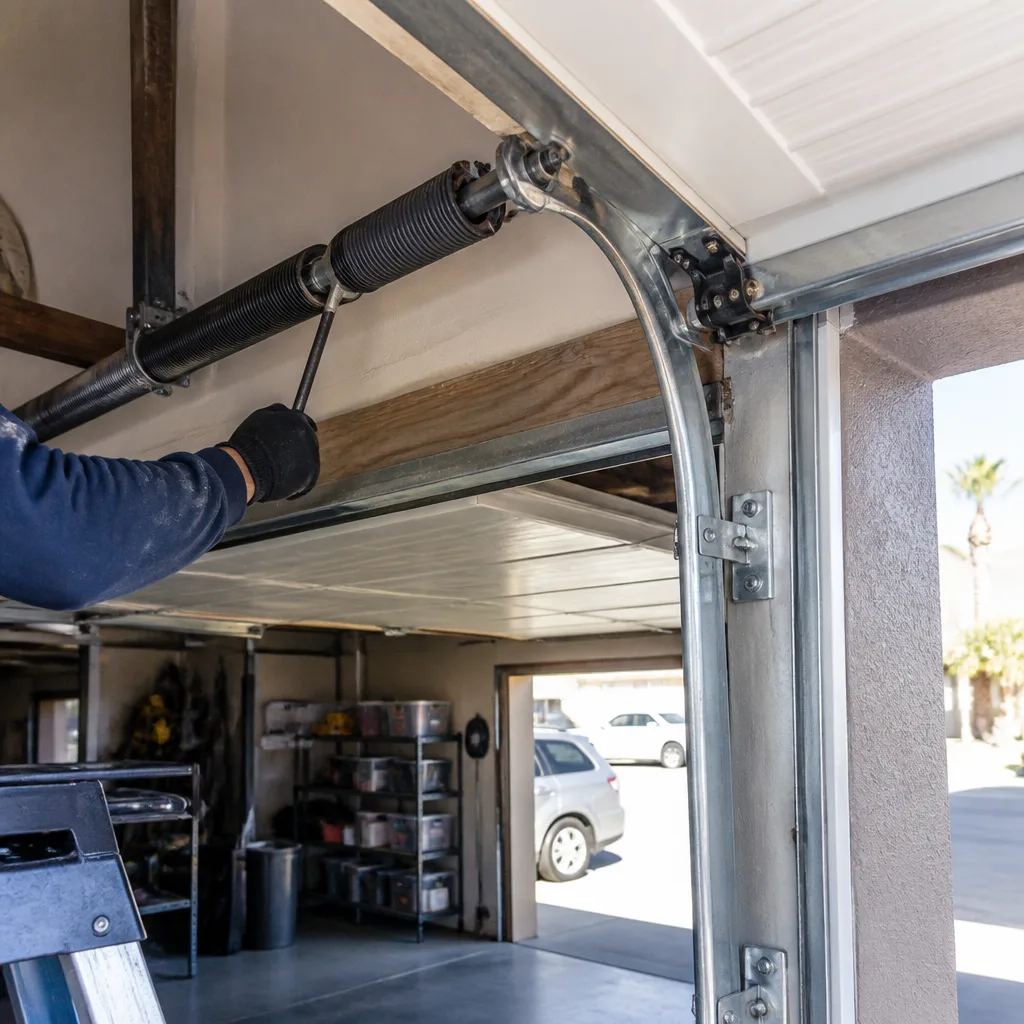 After
After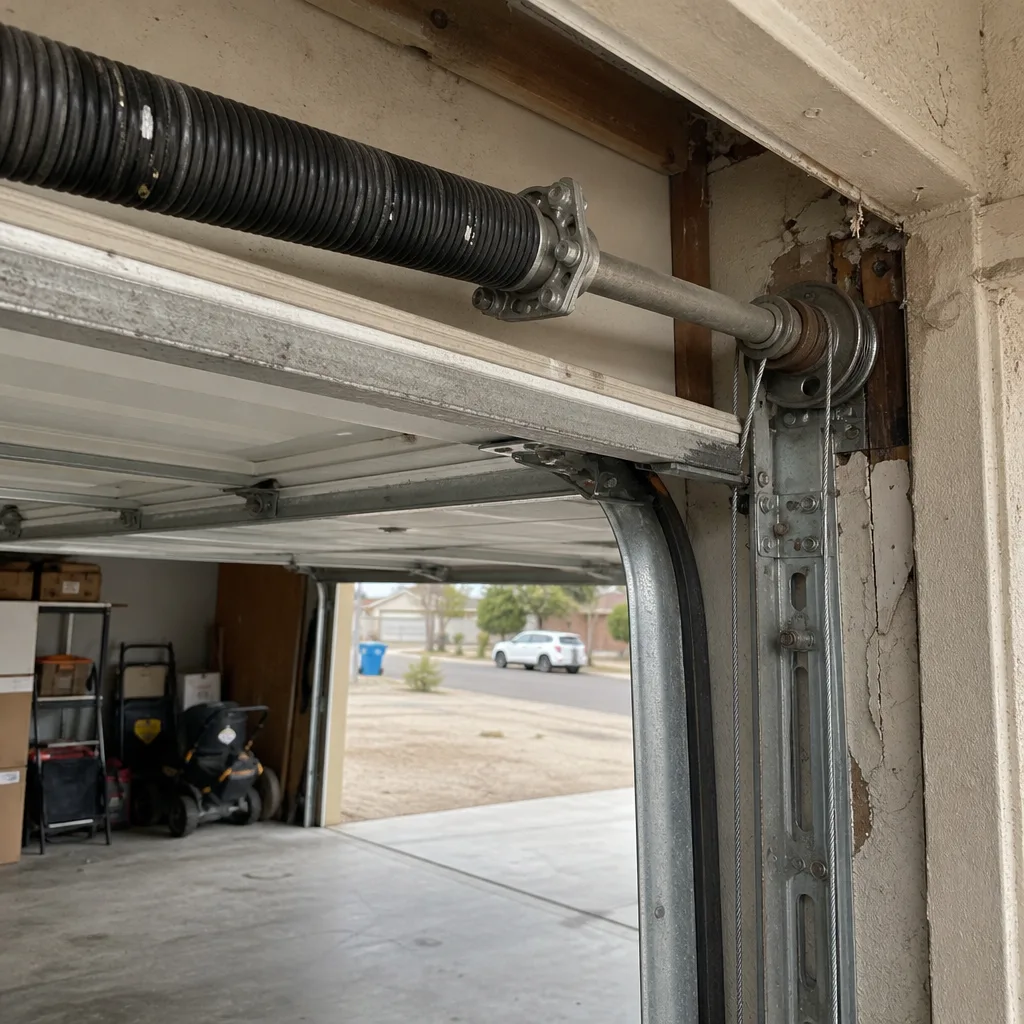 Before
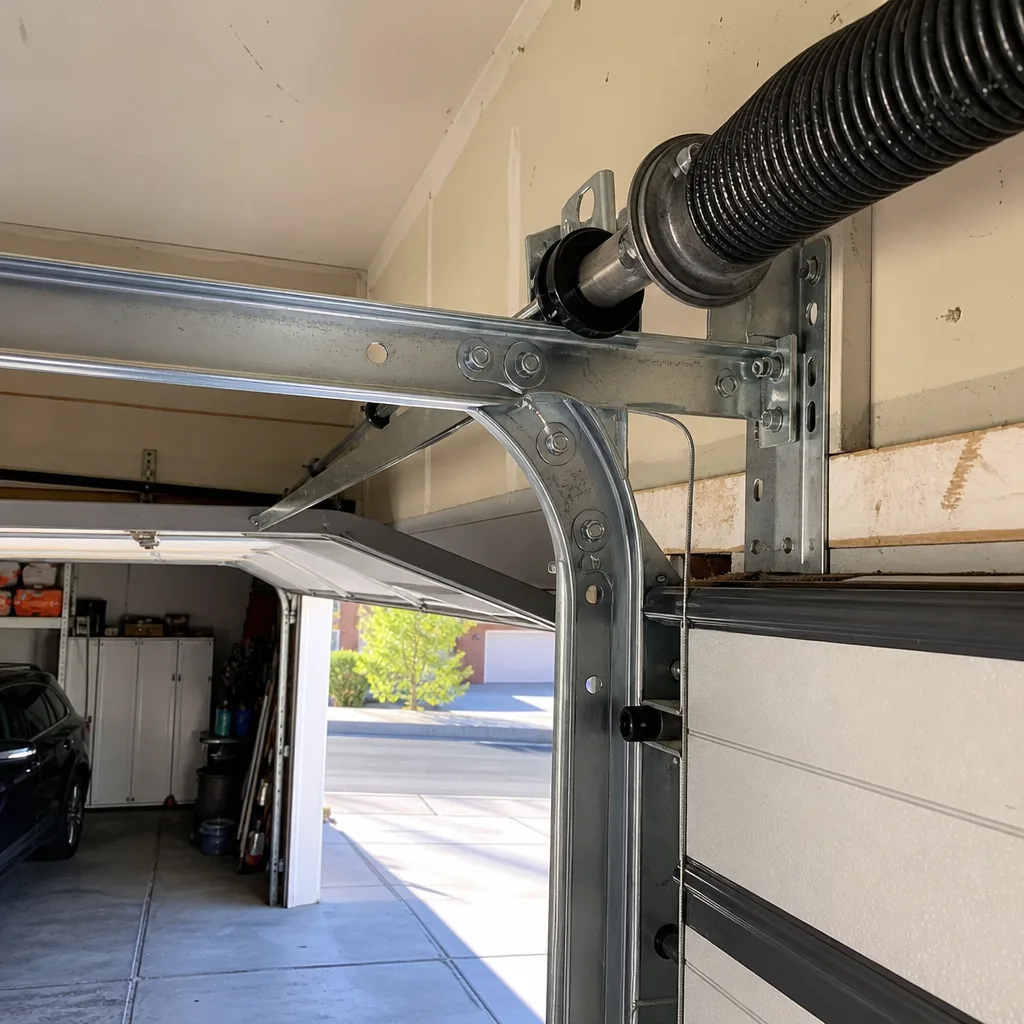 After
After